






























By Bright Kwashie Dzokoto
Every year, the story is painfully familiar.
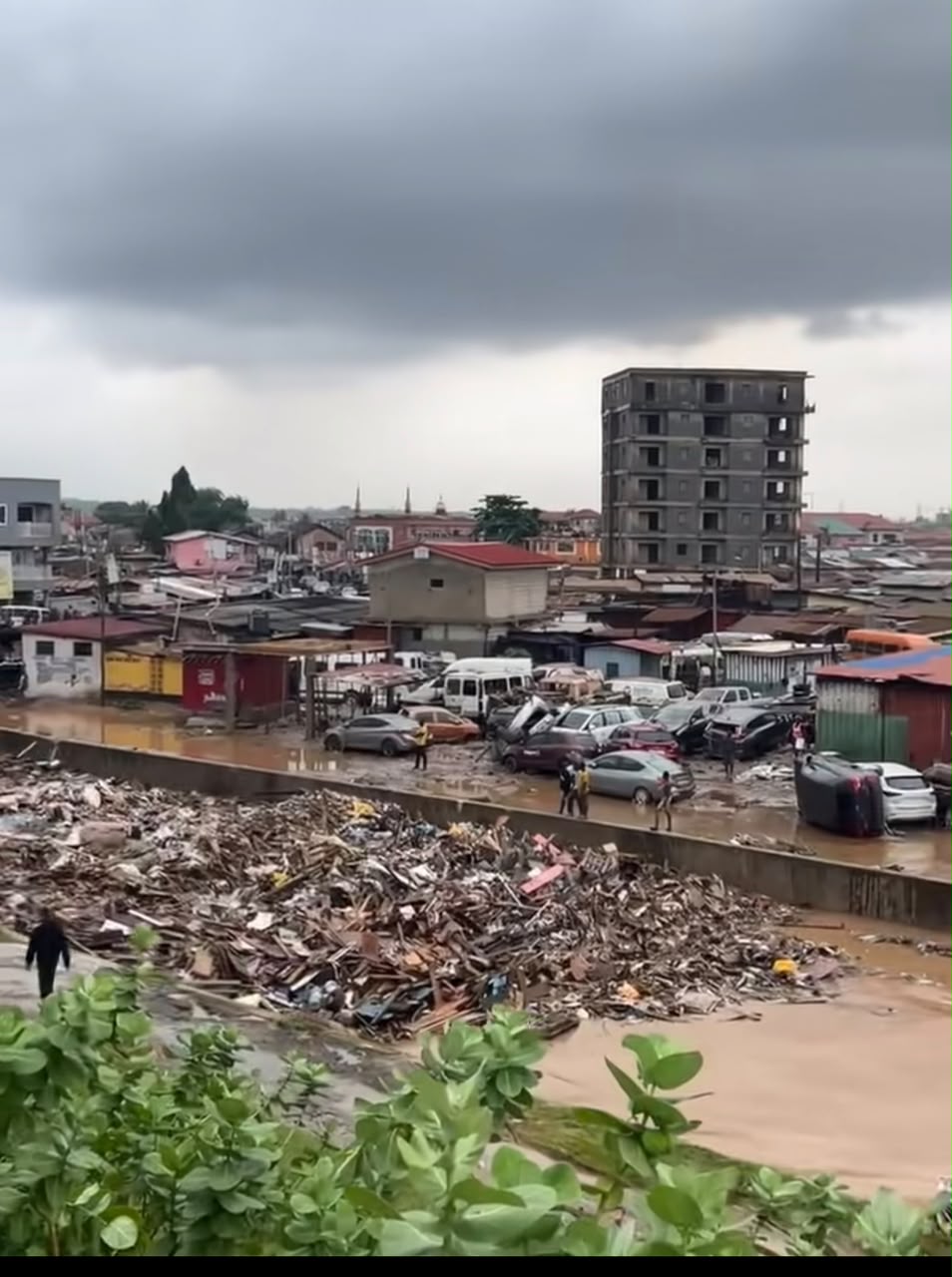
Dark clouds gather. The rains begin to fall. Roads disappear beneath muddy water, homes are submerged, businesses grind to a halt, and families are left counting their losses. Public attention quickly shifts to poor drainage systems, inadequate infrastructure, and government failures. While these are legitimate concerns, they tell only part of the story.
The more uncomfortable truth is that Ghana’s flood disasters often begin weeks and months before the first rainfall. They begin with the everyday choices we make as individuals, communities, and as a nation.
For decades, we have treated our environment with astonishing neglect. Plastic bottles, food containers, sachet water wrappers, and household waste are routinely dumped into gutters, streams, and open spaces. Illegal structures continue to emerge on waterways and wetlands. Across many communities, natural surfaces have been replaced with concrete, preventing rainwater from soaking into the ground as nature intended.
By the time the heavy rains arrive, the outcome is already predictable.
Blocked drains overflow. Rivers burst their banks. Roads become impassable. Homes are flooded. Businesses shut down. Livelihoods are destroyed, and in the worst cases, innocent lives are lost.
The rain does not create these disasters. It merely exposes the consequences of years of environmental abuse.
Nature operates according to principles that neither politics nor public opinion can change. Rivers need room to flow. Wetlands exist to absorb excess water. Trees stabilise the soil, regulate the climate, and reduce erosion. Drainage systems are designed to carry rainwater—not household rubbish.
When these natural systems are ignored, blocked, or destroyed, nature responds.
That response comes in many forms. It may be devastating floods. It may be outbreaks of cholera, typhoid, malaria, and other diseases associated with poor sanitation and contaminated water. It may appear as severe erosion, collapsing roads, declining agricultural productivity, or the gradual destruction of biodiversity upon which human survival depends.
Nature does not punish.
Nature reacts.
Unfortunately, many of us have become experts at blaming everyone except ourselves. We complain about flooded streets after throwing rubbish into the nearest gutter. We criticise authorities while ignoring illegal dumping in our own neighbourhoods. We expect clean communities without accepting personal responsibility for keeping them clean.
Silence has also become part of the problem.
We watch people litter public spaces without challenging them. We see drains clogged with waste but assume someone else will deal with it. We treat environmental responsibility as somebody else’s duty until disaster reaches our own doorstep.
This culture must change.
At the same time, government institutions and city authorities cannot continue operating in an endless cycle of emergency responses, inspections, and promises after every major flood. Each rainy season is followed by committees, press conferences, and assurances, only for the same problems to return the following year.
Leadership is measured by results—not repeated promises.
Metropolitan, Municipal, and District Assemblies must enforce sanitation by-laws consistently and without political interference. Illegal structures built on waterways must be removed in accordance with the law. Drainage systems require regular maintenance throughout the year—not only when heavy rainfall is forecast. Waste collection services must be reliable, efficient, and accessible to every community.
Urban planning must also respect environmental realities. Wetlands should be protected instead of being sacrificed for short-term development. New buildings must meet drainage and environmental standards before approval is granted. Green spaces should be preserved to improve natural water absorption and reduce the risk of flooding.
Public education deserves equal attention.
Schools should strengthen environmental education so that children grow up understanding that protecting nature is essential to public health, economic stability, and national development. Community organisations, traditional leaders, faith-based institutions, civil society groups, and businesses should support regular clean-up exercises and sustained environmental awareness campaigns that encourage lasting behavioural change.
Ultimately, however, the solution cannot come from government alone.
Environmental responsibility begins with ordinary citizens making better decisions every single day. Proper waste disposal, respect for public spaces, and the courage to challenge irresponsible behaviour may seem like small actions, but when multiplied across millions of people, they have the power to transform a nation.
Ghana stands at an important crossroads.
We can continue treating environmental protection as a seasonal conversation that resurfaces only after tragedy strikes, or we can embrace a culture of responsibility that prevents disasters before they occur.
Flood disasters are not simply acts of nature.
More often than not, they are the visible consequences of human choices made long before the clouds gather.
If we continue to disrespect our environment, we should not be surprised when nature responds with floods, disease outbreaks, destruction, and enormous economic losses.
Nature will always have the final word.
The question is whether we are prepared to listen before it speaks again.