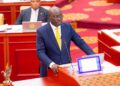

































Shareholders of the Tema Oil Refinery (TOR) have approved the appointment of Edmond Kombat as the company’s Managing Director at its 18th Annual General Meeting (AGM) held in Accra on June 30, 2026.

Kombat, who has been serving in an acting capacity, is credited with contributing significantly to TOR’s recent financial and operational improvements, which informed shareholders’ decision to confirm him in the substantive role.
The appointment comes amid ongoing efforts to revive the fortunes of the state-owned refinery, which has faced years of operational difficulties, accumulated debt, and intermittent shutdowns due to crude supply challenges and working capital constraints.
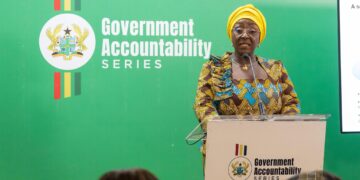
The State Interests and Governance Authority (SIGA) recently reported that the Tema Oil Refinery (TOR) has submitted audited accounts covering the 2019 to 2025 financial years. It noted that the refinery had previously not produced audited accounts for the 2019-2024 period.
According to SIGA, TOR recorded a profit before tax of GH¢1.24 billion in 2025, representing its first profit in 10 years.
The authority described the development as a strong indicator of recovery, pointing to improved revenue performance and strengthened financial management.
It further highlighted a foreign exchange gain of GH¢1.3 billion, driven by financial and forex management strategies, as well as growth in associate profit to GH¢155 million.
SIGA noted that TOR also recorded a reduction in trade and other payables from GH¢7.1 billion in 2024 to GH¢5 billion in 2025, alongside a decline in overall debt levels over the same period.
Receivables management also improved significantly, with receivable days reducing from 1,099 days to 652 days, reflecting improved cash flow discipline.
SIGA further noted the completion of Turnaround Maintenance (TAM) works and the refining of about 600,000 barrels of crude oil, describing these as clear evidence of renewed operational capacity and progress in TOR’s recovery efforts.
Over the past 17 months, TOR has implemented a recovery programme aimed at restoring refining activity, improving governance, and stabilising its finances. Key interventions have included cost-cutting measures, operational restructuring, and renewed engagement with stakeholders in the petroleum downstream sector.
The refinery has also worked to improve crude processing readiness, address legacy debt obligations, and explore partnerships to enhance capacity utilisation.