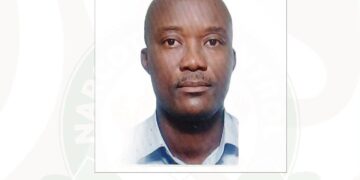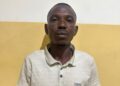











The conviction of former Goldman Sachs executive Asante Kwaku Berko in the United States has renewed calls for Ghana to identify officials allegedly linked to a bribery scheme surrounding the AKSA Enerji emergency power project.
A federal jury in Brooklyn on August 6, 2026, convicted Berko of conspiracy to violate the Foreign Corrupt Practices Act (FCPA), violating the FCPA and conspiracy to commit money laundering.
According to the United States authorities, Berko participated in a scheme involving more than US$1 million in alleged bribes to Ghanaian officials connected to AKSA Enerji’s emergency power project.
Berko is awaiting sentencing.
The conviction has intensified questions in Ghana over the identities of officials referred to in the US case by coded descriptions rather than their names.
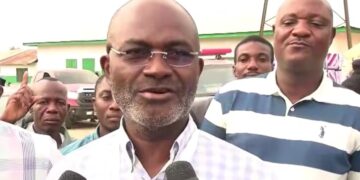
Among those now coming under renewed public scrutiny are former Power Minister Dr Kwabena Donkor and his then Technical Adviser, Francis W. K. Dzata, while the identity of another official described in the US case as “Ghana Official 2” remains unresolved.
Donkor and Dzata in the spotlight
The former Power Minister, Dr Kwabena Donkor, is readily identifiable from the public record as the senior Ghanaian official referred to in the US case.
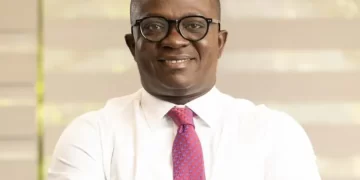
Francis W. K. Dzata, who served as Technical Adviser to the Minister, has also emerged as the strongest documentary match for “Ghana Official 1” in the reconstruction of the case.
His documented responsibilities appear to correspond with activities attributed by US prosecutors to the adviser who communicated concerns involving the Minister, helped organise a Turkey inspection and circulated an Emergency Project Team on March 11, 2015.
The identity of “Ghana Official 2” is less certain.
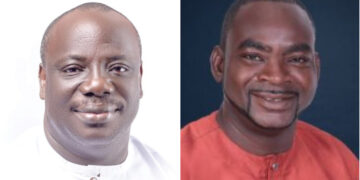
John Abdulai Jinapor, who was then Deputy Minister of Power, has been identified as a possible match. William Owuraku Aidoo, another former Deputy Minister, has also been mentioned as being within the relevant official universe.
However, neither should be described as “Ghana Official 2” as an established fact until documentary evidence confirms the identity.
The distinction is important because being named in an investigative reconstruction does not amount to an allegation or finding of criminal wrongdoing.
The money trail
The figures contained in the US case raise serious questions about the alleged payments.
The case refers to discussions involving US$1 million for Ghana’s Minister of Power and US$250,000 for his senior adviser.
Five Ghanaian officials allegedly travelled to Turkey at AKSA’s expense and reportedly received US$5,000 each.
Other correspondence referred to approximately US$120,000 associated with the Public Utilities Regulatory Commission (PURC), US$20,000 for GRIDCo engineers, US$20,000 for three Ministry officials described as the “MoP Girls”, US$25,000 for an eight-member “Power Team” and approximately US$46,000 allegedly paid to Members of Parliament.
The identities of the individuals behind those descriptions are now a central question for investigators.
The Emergency Project Team
One potentially significant document is dated March 11, 2015.
On that date, “Ghana Official 1” reportedly circulated an Emergency Project Team comprising representatives from agencies responsible for completing tasks necessary for the AKSA project.
“Ghana Official 2” was also listed on the team.
The question now is whether that Emergency Project Team was the same group later referred to in correspondence as the eight-person “Power Team”.
If the two groups were the same, the March 11 document could provide investigators with a direct route to identifying several of the officials referenced in the US prosecution.
The Ministry of Power, ECG, GRIDCo, PURC and other institutions should therefore be able to assist in reconstructing who held the relevant positions and participated in the project.
Parliament’s role
The alleged US$46,000 payment involving Members of Parliament also raises questions about the parliamentary committee that dealt with the power project.
The Mines and Energy Committee at the time was chaired by Amadu Bukari Sorogo, with Adam Mutawakilu as Vice Chairman. Kobina Tahir Hammond was the Ranking Member, while Edward Ennin served as Deputy Ranking Member.
Other members included Mahama Toure Naser, Gershon K. B. Gbediame, Salifu Ameen, Kwadwo Emmanuel Agyekum, Michael Coffie Boampong, Cletus Apul Avoka, Mohammed Mubarak Muntaka, Mathias Kwame Ntow, Dr Stephen Nana Ato Arthur, Isaac Kwame Asiamah, William Owuraku Aidoo, Mustapha Ussif, Benjamin Kofi Ayeh and Joseph Cudjoe.
These individuals should not be described as accused persons merely because they served on the committee.
Rather, the committee’s membership provides an investigative universe against which the US allegation involving approximately US$46,000 can be tested.
Investigators can establish who attended relevant proceedings, who interacted with AKSA representatives, who appeared in Berko’s communications and whether any of the alleged payments can be linked to identifiable individuals.
Officials across Ghana’s energy sector
The institutional trail also extends to the Energy Commission, GRIDCo, PURC, ECG and VRA.
Names associated with the relevant institutional and technical landscape include Alfred Ofosu Ahenkorah, William Amuna, Samuel Kwadwo Sarpong, Emmanuel K. Annan, Robert Dwamena, Kirk Koffi, Samuel F. Kwofie, Bernard Modey, Eric Asare, Norbert Anku, Suraj Amadu and Isaac Akesseh.
Their former positions do not establish wrongdoing.
However, their institutional records may help investigators determine who was responsible for various stages of the emergency power project and who may have interacted with the parties identified in the US case.
Ayine and Jinapor
The case also has a present-day political dimension.
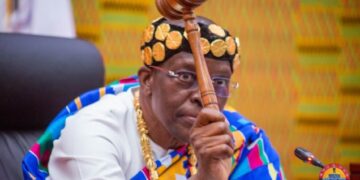
Dominic Ayine, who was Deputy Attorney General during the period under review, is now Ghana’s Attorney General.
John Abdulai Jinapor, who was then Deputy Minister of Power, is now Minister for Energy.
William Amuna, who was then Chief Executive of GRIDCo, now chairs the Electricity Company of Ghana.
Their current positions do not constitute evidence of misconduct.
However, their previous roles underscore the importance of ensuring that any investigation into the matter is conducted independently and transparently.
Ghana must now follow the evidence
The Office of the Special Prosecutor (OSP) has an important role to play in determining whether the evidence available from the United States points to offences under Ghanaian law.
The Attorney General also has a critical role in international criminal cooperation, including facilitating the exchange of evidence and cooperation between Ghanaian and US authorities.
The two roles should complement each other while ensuring that investigators can follow the evidence wherever it leads.
The Berko case spans different political administrations. It began under an NDC government, remained unresolved through eight years of NPP government and has now returned to another NDC administration.
The political identities of the governments involved should not determine the direction or outcome of the investigation.
What matters is whether the evidence establishes that any Ghanaian officials participated in criminal conduct.
What Ghana can do now
There are several obvious investigative trails.
The Ministry of Power can produce the March 11, 2015 Emergency Project Team document.
GRIDCo and ECG can identify the officials and engineers assigned to the project.
PURC can reconstruct its regulatory involvement.
Immigration records can establish the identities of the five Ghanaian officials who allegedly travelled to Turkey.
Parliament can examine its records to determine which MPs interacted with the promoters or appeared in communications relating to the alleged US$46,000 payment.
Corporate records can identify the individuals behind the Ghanaian consulting companies mentioned in the US case.
Banking records can then be used, where legally available, to establish account ownership, transfers, withdrawals and beneficiaries.
These steps would help move the matter beyond political speculation and towards evidence-based investigation.
The US prosecution has already produced a conviction against Berko.
The remaining question for Ghana is whether the evidence behind that conviction can now be fully examined locally and whether the individuals allegedly involved in the Ghanaian side of the scheme can be identified.
The names must come from the evidence—not political affiliation, speculation or partisan pressure.
The Berko conviction has reopened the case.
Ghana now has an opportunity to follow the money, identify the people behind the aliases and establish, through evidence, what happened to the alleged bribery payments connected to one of the country’s most controversial emergency power projects.