

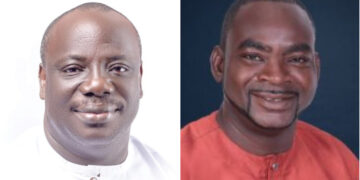























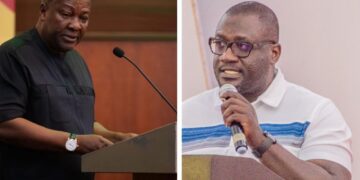



The National Chairman of the National Democratic Congress (NDC), Johnson Asiedu Nketia, remains the frontrunner to lead the party into the 2028 general election, but a new poll by Global InfoAnalytics suggests the contest is becoming increasingly competitive as Finance Minister Dr Cassiel Ato Forson continues to gain ground.
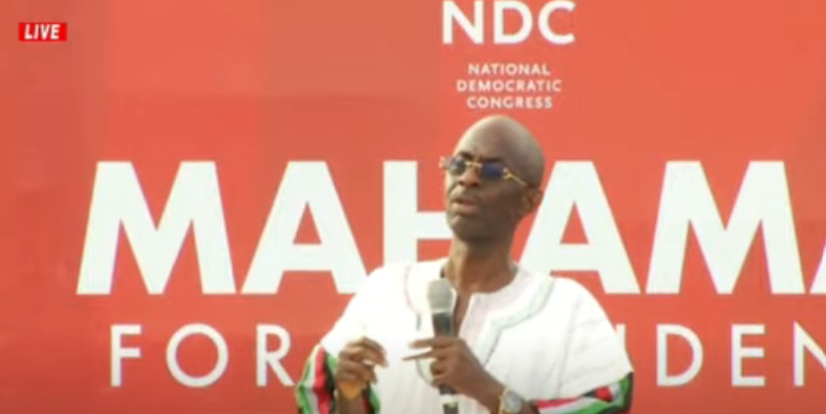
According to the latest survey, Mr Asiedu Nketia commands 27 per cent support among NDC delegates, maintaining his lead despite a slight decline from the 29 per cent recorded in the polling firm’s April 2026 survey.
Dr Ato Forson emerged as the biggest gainer in the latest poll, improving his support from 19 per cent in April to 22 per cent in July, narrowing the gap with the party chairman to five percentage points.
The findings indicate an increasingly open race, with 30 per cent of delegates still undecided, up from 24 per cent in the previous survey.
Other potential contenders recorded lower levels of support. Education Minister Haruna Iddrisu experienced the sharpest decline, dropping from 11 per cent in April to six per cent in the latest poll. Vice President Professor Jane Naana Opoku-Agyemang’s support also dipped from eight per cent to seven per cent, while former Chief of Staff Julius Debrah fell from eight per cent to five per cent.
Professor Joshua Alabi, Minister for Food and Agriculture Eric Opoku and other prospective aspirants each secured one per cent support.
Support for Asiedu Nketia as National Chairman
Beyond the flagbearer race, the survey found strong backing among delegates for Mr Asiedu Nketia to remain National Chairman of the NDC.
Sixty-one per cent of respondents agreed that he should continue in the position, while 26 per cent disagreed. Thirteen per cent expressed no opinion.
Growing calls for Ato Forson
The poll also points to increasing support for Dr Ato Forson as the party’s preferred candidate to face the New Patriotic Party’s expected 2028 presidential contender, Dr Mahamudu Bawumia.
According to the survey, 58 per cent of delegates agreed that the NDC should field Dr Ato Forson, an economist, against Dr Bawumia, who is also an economist. Twenty-three per cent disagreed, while 19 per cent were undecided.
Notably, one in four delegates who currently back Mr Asiedu Nketia also said they would support Dr Ato Forson as the party’s presidential candidate.
Head-to-head contests
In a direct matchup between the two leading contenders, Mr Asiedu Nketia and Dr Ato Forson were statistically tied.
Mr Asiedu Nketia secured 34 per cent support compared with Dr Ato Forson’s 33 per cent, while 33 per cent of delegates remained undecided. In April, Mr Asiedu Nketia held a wider advantage of 37 per cent to 32 per cent.
However, Mr Asiedu Nketia maintained more commanding leads against other potential aspirants.
In a head-to-head contest with Haruna Iddrisu, he led 45 per cent to 16 per cent, with 39 per cent undecided. Against Professor Jane Naana Opoku-Agyemang, he secured 46 per cent support compared with her 15 per cent. He also led Julius Debrah by 45 per cent to 16 per cent.
Regional trends
The poll revealed notable regional variations in support.
In the key swing regions of Greater Accra, Central and Western, Dr Ato Forson led with 29 per cent, ahead of Mr Asiedu Nketia’s 23 per cent. Professor Opoku-Agyemang polled eight per cent, Julius Debrah five per cent and Haruna Iddrisu four per cent, while 27 per cent of delegates remained undecided.
In the Akan-speaking regions, comprising Ashanti, Ahafo, Bono, Bono East, Central, Eastern, Western and Western North, Mr Asiedu Nketia maintained a narrow lead with 27 per cent, followed closely by Dr Ato Forson on 25 per cent. Professor Opoku-Agyemang secured six per cent, Julius Debrah five per cent and Haruna Iddrisu three per cent, while 31 per cent of respondents were undecided.
The latest Global InfoAnalytics survey suggests that although Mr Asiedu Nketia remains the early favourite for the NDC’s 2028 presidential nomination, Dr Ato Forson’s growing support is steadily reshaping the dynamics of the race, setting the stage for what could become a closely fought contest in the lead-up to the party’s presidential primaries.