
































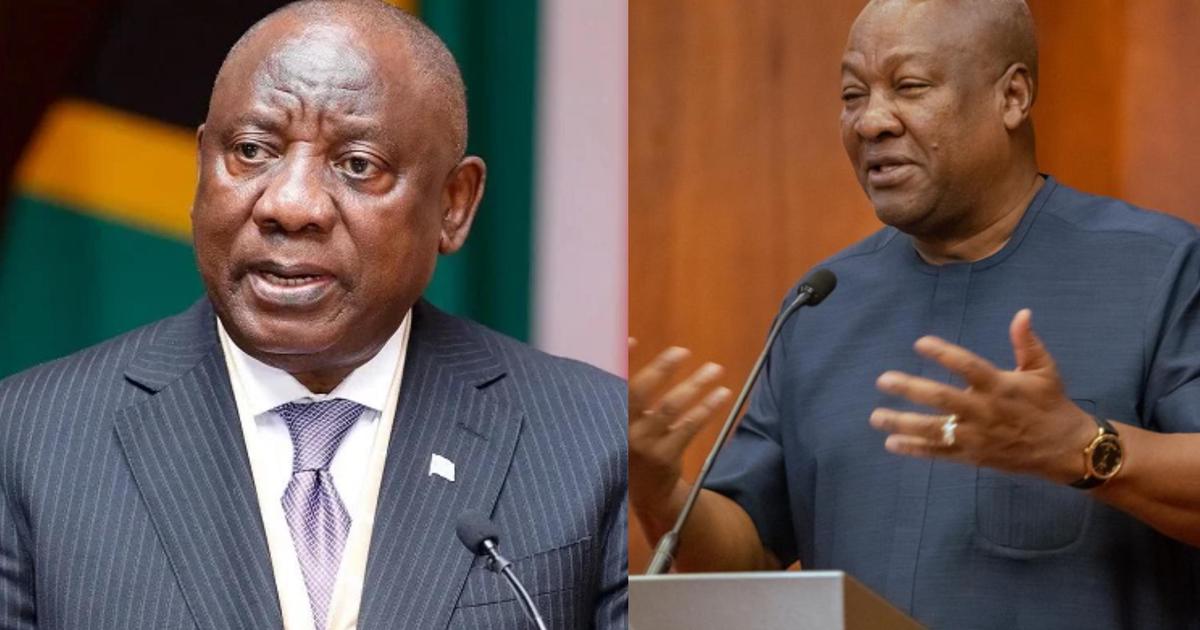
The Government of Ghana has declined a planned state visit by South African President Cyril Ramaphosa, citing concerns over the killing of a Ghanaian national and reports of renewed attacks targeting foreign nationals in South Africa.
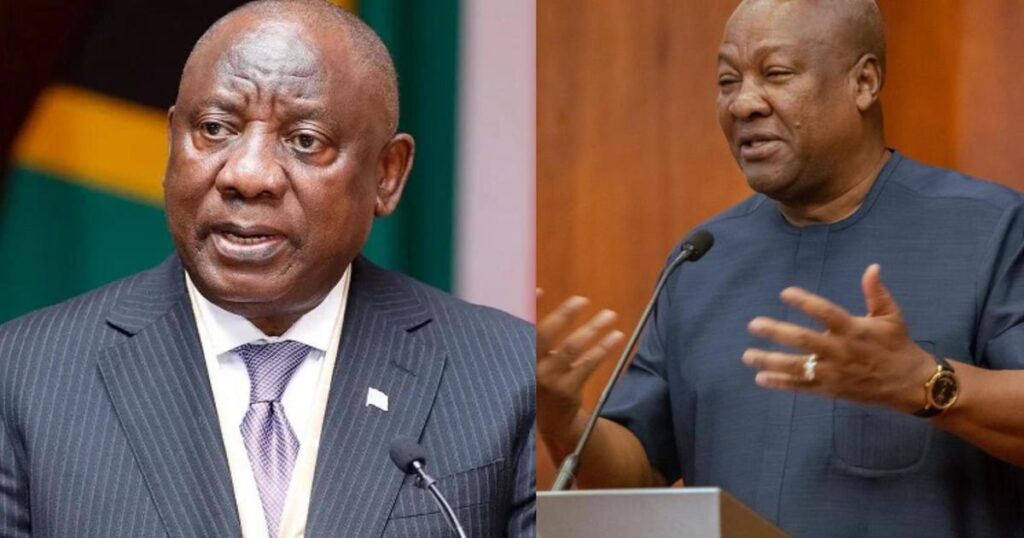
The decision follows the death of 40-year-old Bashiru Isak, who Ghanaian authorities say was killed during demonstrations linked to alleged xenophobic attacks in South Africa on June 30.
Government sources said the decision to postpone the visit was taken amid growing concerns about the safety of Ghanaians living in South Africa and the need for urgent action to address reported incidents of violence against foreign nationals.
President Ramaphosa was expected to undertake the state visit during the first week of August, with discussions expected to focus on strengthening bilateral relations, trade and investment, as well as regional cooperation. However, Ghanaian officials indicated that resolving concerns over the security of its citizens in South Africa had become a priority before any high-level diplomatic engagement could proceed.
The Government of Ghana has also lodged a formal protest with South African authorities over the death of Mr Isak and what it described as the increasing vulnerability of Ghanaian nationals living in the country.
According to Ghanaian officials, Mr Isak was shot and killed during what they described as anti-immigrant demonstrations linked to renewed xenophobic attacks in Cape Town’s Khayelitsha township.
South African authorities have, however, rejected Ghana’s account of the incident, describing the claims as “factually incorrect” and insisting that no deaths were recorded during the June 30 demonstrations, which drew thousands of protesters in parts of the country.
South Africa’s Justice Minister, Mmamoloko Kubayi, accused Ghanaian authorities of spreading misinformation that unfairly portrays South Africa as xenophobic.
“It is concerning that Ghanaian authorities continue to communicate false information about South Africa regarding developments on irregular migration,” she said in a statement.
“The spread of false information to perpetuate the false narrative that South Africa is xenophobic is unacceptable,” she added.
The differing accounts have heightened diplomatic tensions between the two countries, with Ghana calling for stronger measures to protect its citizens abroad while South Africa maintains that the claims surrounding the incident are inaccurate.
The development has reignited concerns over the safety of African migrants living in South Africa, where periodic outbreaks of violence targeting foreign nationals have drawn condemnation from governments across the continent.
Despite the latest disagreement, Ghana and South Africa have long enjoyed strong diplomatic relations, with cooperation spanning trade, investment, regional security and multilateral affairs. Analysts say both governments are expected to engage through diplomatic channels in an effort to resolve the dispute while preserving the broader relationship between the two countries.