

































As the Bank of Ghana (BoG) announces plans to raise $1 billion from the domestic bond market to finance cocoa purchases for the 2026/2027 crop season.
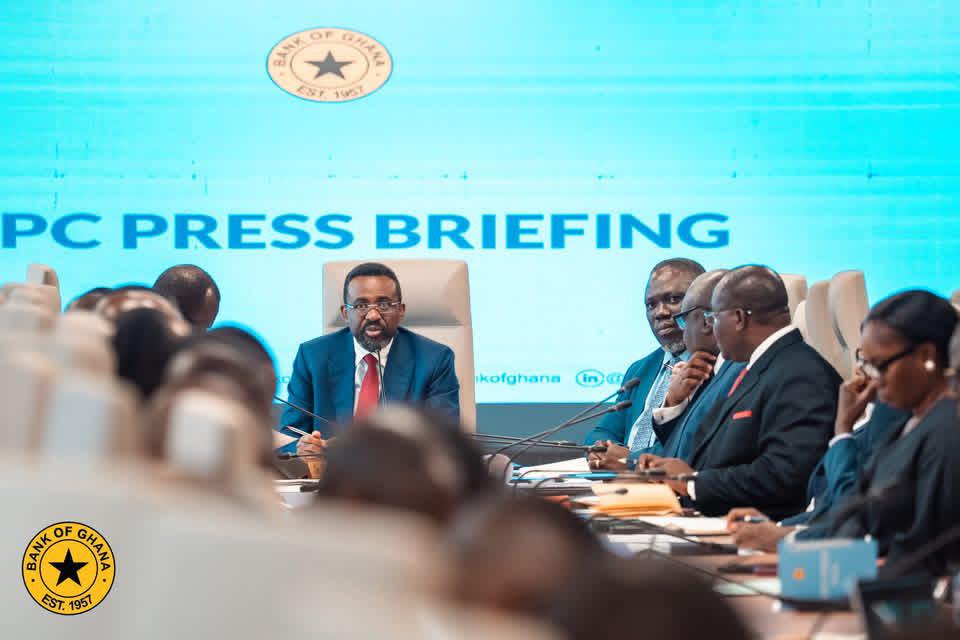
The Governor of the Bank of Ghana, Dr Johnson Pandit Asiama, disclosed that the initiative is aimed at strengthening Ghana’s cocoa financing system while reducing reliance on foreign borrowing and external lenders.
According to him, the move forms part of broader efforts to stabilise the cocoa sector, particularly following the reduction in farmgate cocoa prices earlier in 2026. The new financing model is also expected to deepen the domestic capital market, boost investor participation and reinforce confidence in Ghana’s bond market after the successful resumption of treasury bond issuance earlier this year.
Under the arrangement, funds will be mobilised through financial instruments such as commercial paper and commercial notes, leveraging domestic liquidity sources.
Speaking at the opening of the 130th meeting of the Monetary Policy Committee (MPC) at the Bank of Ghana headquarters, Dr Asiama described the initiative as a major shift in the country’s cocoa financing strategy.
“This is a significant shift to reduce reliance on dollar funding and foreign lenders,” he stated.
He added that the model would help promote price stability, support sustainable incomes for cocoa farmers and improve long-term debt management.
The six-member Monetary Policy Committee, which is responsible for setting policy rates and regulating money supply, began its meeting amid growing concerns about global economic pressures. A press conference is expected after the meeting to announce the committee’s decision on the policy rate, which currently stands at 14 per cent.
The committee is being supported by economic advisors and stakeholders, including Presidential Advisor on the Economy Seth Terkper, representatives of the Ghana Association of Bankers and the Association of Ghana Industries.
Dr Asiama identified rising global energy prices and inflationary pressures as key risks likely to influence policy decisions. He explained that the prolonged conflict in the Middle East has led to sustained increases in global crude oil prices, with corresponding impacts on fuel costs, transportation and consumer prices in Ghana.
He warned that external commodity price shocks, coupled with domestic energy supply challenges, could undermine inflation control efforts and affect recent macroeconomic gains.
“The committee will carefully assess measures needed to keep inflation expectations anchored while sustaining economic stability and credit growth,” he said.
The Governor noted that Ghana’s economic conditions had improved significantly since the previous MPC meeting in March due to ongoing reform efforts. However, he cautioned that these gains were now being tested by worsening global conditions linked to the Middle East conflict.
He further explained that the closure of the Strait of Hormuz had intensified pressure on global oil prices, with inflationary effects being felt across both advanced and emerging economies.
Dr Asiama also revealed that Ghana’s engagement with the International Monetary Fund (IMF) remains ongoing following the completion of the sixth and final review under the Extended Credit Facility programme.
He noted that the IMF had acknowledged Ghana’s stabilisation progress, including lower inflation, improved external reserves, a stronger cedi and enhanced debt sustainability.
Discussions are currently underway towards a 36-month non-financing Policy Coordination Instrument (PCI) arrangement aimed at strengthening reforms, improving policy credibility and reducing reliance on IMF financial support.
According to the Governor, the PCI will help preserve the benefits of IMF engagement while reinforcing domestic ownership of reforms and fiscal discipline.
He added that the arrangement would support improvements in the Bank of Ghana’s monetary policy framework, enhance liquidity forecasting and maintain the inflation-targeting regime, while also strengthening the central bank’s balance sheet through reduced quasi-fiscal activities and improved transparency.