





























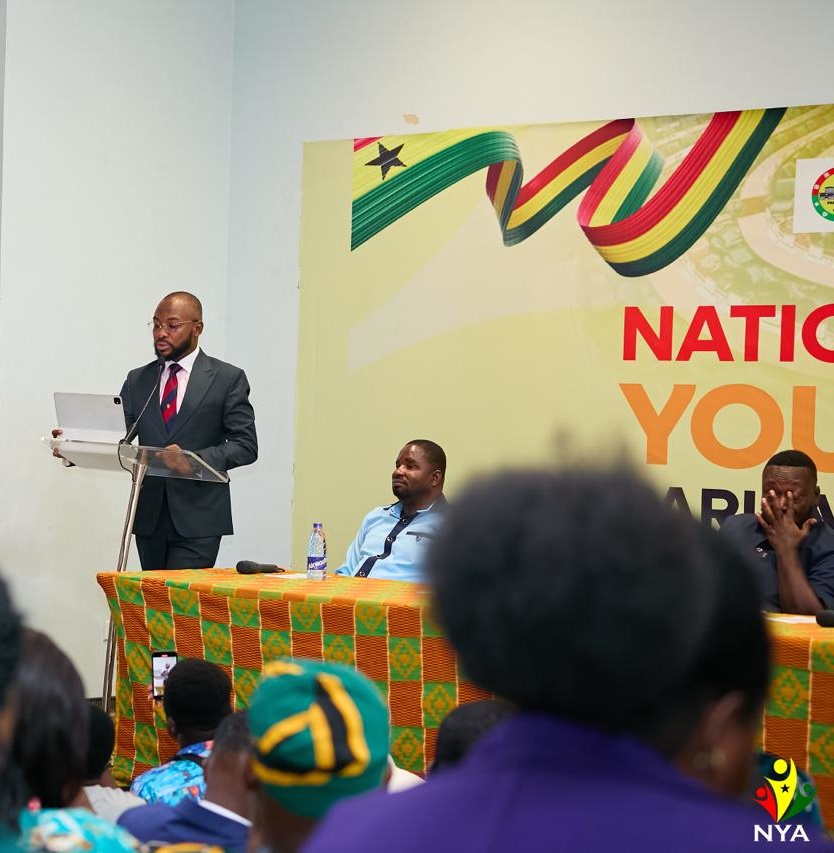
The Chief Executive Officer of the National Youth Authority (NYA), Osman Abdulai Ayariga, has called for greater inclusion of young people in Ghana’s decision-making processes, stressing that the youth must not only be spoken about but must be present at the table where decisions are made.
According to him, young people are not “citizens-in-waiting” but citizens who already have a legitimate stake in decisions affecting the country.
Mr Ayariga made the call at the National Youth Parliament Mock Sitting, organised in collaboration with the Parliament of Ghana.
He said the initiative marked the first collaboration of its kind between the NYA and Parliament and represented an important step towards bringing young people closer to Ghana’s democratic institutions.
“For far too long, conversations about young people have taken place without enough young people at the table,” he said, noting that issues such as unemployment, education, skills development, entrepreneurship, technology, mental health, climate change, leadership and governance directly affect the youth.
He said the National Youth Parliament was not merely an event for young people to deliver speeches, but a platform for learning, questioning, deliberation and active participation in governance.
Mr Ayariga urged participants to use the platform to develop the confidence and competence needed for effective democratic participation.
He said young people must be equipped to debate respectfully, listen to opposing views, interrogate policies, propose alternatives and hold institutions accountable.
The NYA boss also urged young people to prepare themselves before seeking a place at the decision-making table.
“Do not come merely because you are young. Come because you have ideas. Come because you have studied the issues. Come because you understand the realities of your community,” he said.
He explained that youth participation in political discourse should go beyond partisan politics and elections to include citizenship and engagement with policies affecting education, employment, businesses, communities and the environment.
Mr Ayariga further challenged participants in the Youth Parliament to ensure that their deliberations produced recommendations that could be presented to the NYA and relevant institutions for consideration.
He said the ultimate objective should be to move beyond giving young people a platform to creating mechanisms through which their voices could influence policy and national development.
The CEO said the NYA remained committed to working with Parliament, the Ministry of Youth Development and Empowerment, development partners, civil society organisations and young people to deepen youth participation in national development.
He urged young Ghanaians to understand the Constitution, learn how Parliament works, engage public institutions and take their civic responsibilities seriously.
He said Ghana’s future must not simply happen to its young people but must be something they actively help to shape.
“Ghana does not merely gain young voices; Ghana gains new ideas, new leadership and new possibilities for its future,” Mr Ayariga added.