


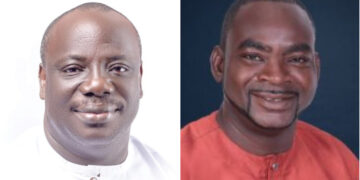









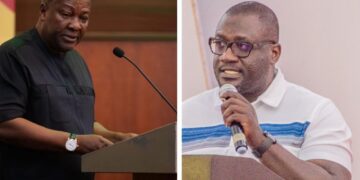



A controversial lawmaker, has called for accountability, following the interception in Australia of a large consignment of methamphetamine said to have originated from Ghana. He described the incident as an international embarrassment and a vindication of concerns he had previously raised about drug trafficking through the country.
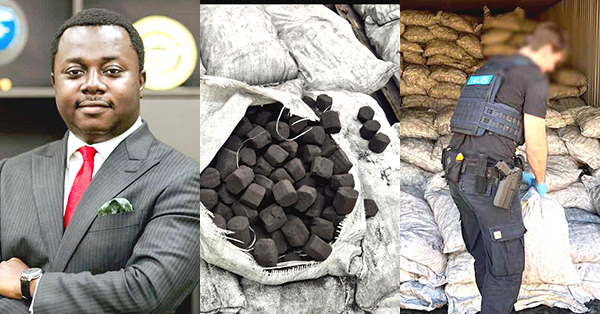
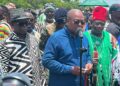
The Member of Parliament (MP) for Assin South and Ranking Member on Parliament’s Defence and Interior Committee, Rev. John Ntim Fordjour, reacted to reports that Australian authorities had seized approximately 320 kilogrammes of methamphetamine concealed in sacks of charcoal shipped from Ghana.
The arrested drug has been valued at £145 million, roughly equivalent to US$196 million.
Ntim Fordjour sparked a major national controversy in April 2025 when he alleged that two aircraft that landed at Kotoka International Airport may have been involved in drug trafficking and money laundering operations.
At a press conference, Ntim Fordjour claimed that intelligence available to the Minority in Parliament indicated that AirMed Flight N823AM, an air ambulance, landed in Accra on 20 March 2025 and remained in Ghana for five days before departing on 25 March.
The aircraft allegedly carried no patient despite being registered as an air ambulance. Intelligence reports allegedly suggested the aircraft transported suspicious cargo believed to include cocaine and large amounts of foreign currency.
A second aircraft, Cavok Air Antonov An-12B, which arrived on 12 March 2025 and remained in Ghana until 25 March, was also suspected of involvement in transporting drugs and cash.
But independent flight-tracking data confirmed that AirMed Flight N823AM arrived at Kotoka International Airport on 20 March 2025. The aircraft remained in Ghana for approximately five days before departing on 25 March, and the Cavok Air cargo aircraft also landed in Ghana and remained for an extended period.
However, flight data alone did not establish that either aircraft carried drugs or illicit cash.
The government strongly rejected the allegations, with spokesperson Felix Kwakye Ofosu stating that the flights entered Ghana for legitimate purposes. The AirMed aircraft reportedly experienced maintenance problems while in Ghana.
It also emerged that the Cavok aircraft had allegedly developed technical faults requiring repairs; there was no evidence of drug trafficking or money laundering linked to either aircraft.
AirMed International denied any involvement in drug trafficking, stating that its prolonged stay at Kotoka Airport resulted from maintenance issues and logistical requirements related to the aircraft.
However, in a social media post on Friday, June 19, 2026, Rev. Ntim Fordjour, who is out to score some political points from the current arrest, argued that the current development supported his earlier warnings that Ghana risked becoming a transit point for international drug trafficking.
“Another major drug bust originating from our country? When I kept cautioning about Ghana becoming a transit point for drug trafficking, NDC and Jubilee House released all their attack machineries on me,” he wrote.
The lawmaker, who is on the ticket of the New Patriotic Party (NPP), expressed disappointment that his previous concerns had been dismissed by government officials and supporters of the ruling National Democratic Congress (NDC).
He further called on the Minister for Government Communications, Felix Kwakye Ofosu, as well as the Narcotics Control Commission (NACOC) and the Bureau of National Investigations (BNI), to provide explanations to the Ghanaian public.
“Now see the international embarrassment. Felix Kwakye Ofosu, NACOC and BNI owe this country an explanation. They shouldn’t escape accountability!” he added.
The comments followed the arrest and charging of a British actress, Emaa Hussen, 34, in Australia over allegations that she attempted to import nearly A$296 million worth of methamphetamine into the country from Ghana.
Hussen was charged on Thursday, June 18, alongside an Australian couple accused of participating in what authorities describe as a major drug-smuggling operation. She is the third person to be charged in connection with the case.
Australian authorities allege that the drugs were concealed in a consignment declared as charcoal and shipped from Ghana before being intercepted at Port Botany in Sydney.
According to the Australian Federal Police (AFP), officers from the Australian Border Force (ABF) became suspicious after inspecting the shipment and discovering what was described as a white crystallised substance inside bags purportedly containing charcoal.
Subsequent testing allegedly confirmed the substance to be methamphetamine.
Authorities estimate that the seized drugs, weighing approximately 320 kilogrammes, had a street value of about A$296 million and would have supplied more than 3.2 million individual drug deals.
Investigators allege that Hussen assisted in unpacking the drugs after the shipment was delivered to a storage facility in Girraween, western Sydney.
Police further claim that she later travelled to a property in Blacktown, where she was arrested.
During searches of the residence, officers reportedly recovered 32 empty bags believed to have previously contained narcotics. Electronic devices and a notebook were also seized for forensic examination.
The Australian couple, aged 30 and 32 and based in Adelaide, were charged in April and are expected to appear before the court in September.
Hussen, who reportedly appeared as Naz in EastEnders: E20, a spin-off of the BBC soap opera EastEnders, and later featured alongside actor Jason Statham in the 2013 film Redemption, has been remanded in custody and is due to return to court in August.
Officials at NACOC told The Herald that the commission would investigate the matter in collaboration with international partners. They disclosed that a meeting had been scheduled to discuss the seizure and determine the next course of action.
Australian authorities said organised criminal networks increasingly use sophisticated concealment methods to evade detection.
“Criminal syndicates will go to great lengths to disguise illicit drugs, including embedding them in everyday goods like charcoal, but our highly skilled officers are trained to see beyond these attempts,” an Australian Border Force spokesperson said.
“Working closely with our law enforcement partners, the ABF will ensure that those involved
in trafficking illicit drugs are detected at the border and held accountable.”
The AFP described the seizure as a significant disruption to international organised crime networks.
“The seizure of these drugs with an estimated street value of $296 million has prevented a potential 3.2 million deals from reaching Australian streets and demonstrates the AFP’s ability to operate seamlessly across borders,” the agency said in a statement.
If convicted, Hussen and her co-accused could face lengthy prison terms under Australia’s drug-trafficking laws.
Methamphetamine, commonly known as meth, crystal meth, ice or shabu, is a powerful and highly addictive stimulant that affects the central nervous system. While it has limited medical applications in some countries, most methamphetamine involved in criminal investigations is manufactured and distributed illegally.
Health experts warn that prolonged use can lead to addiction, severe psychological disorders, cardiovascular complications, significant weight loss and psychosis, making it one of the most dangerous illicit drugs in circulation worldwide.
In the case of the aircraft matter, when the allegations became serious enough, President John Dramani Mahama directed security and investigative agencies to examine the claims and work with Ntim Fordjour to determine whether there was evidence to support them, but he refused to honour invitations from the law enforcement authorities.