


































The Court of Appeal is expected to deliver a significant ruling on Thursday, 25 June 2026, in a long-running inheritance dispute involving prominent lawyer and former Ghana Bar Association (GBA) President, Sam Okudzeto, and his half-brother, Peter Kweku Okudzeto.
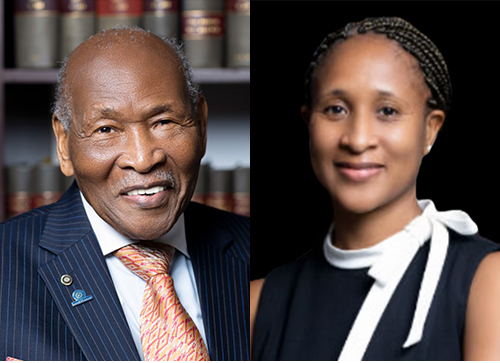
The appeal stems from a High Court decision that struck out Sam Okudzeto, age 90, his daughter, Esine Okudzeto, and their law firm from a lawsuit concerning the administration of two family estates.
A three-member panel of the Court of Appeal, presided over by Justice Emmanuel Ankamah and comprising Justice Samuel Obeng-Diawuo and Justice Cecilia Naa Shormeh Davis, is expected to determine whether the High Court was correct in removing the respondents from the suit and whether allegations of professional misconduct against them warrant further judicial scrutiny.
Peter Okudzeto, who is representing himself alongside fellow appellants Thomas Sekou and Felicia Sekou, has accused Sam Okudzeto, Esine Okudzeto and their law firm of fraud, intermeddling, breach of fiduciary duty, conflict of interest, and undervaluation of estate assets belonging to his maternal side.
The respondents have denied all the allegations. Both Sam and his daughter, Esine, teach Legal Ethics at the Ghana Law School.
On 28 April 2026, the parties appeared before the Court of Appeal to argue their cases. While Sam Okudzeto was represented by Ofosu Boateng, Peter was represented by Andreas Fiadome and Eli Ahu.
At the centre of the dispute are the estates of Baby Angelina Mamle Siaw Sappore and Dr Daniel Narh Siaw, siblings of the late Christiana Aku Sappor, the mother of the appellants. Baby Angelina died on 25 April 2008, while Dr Siaw passed away on 29 October 2023.
The appellants allege that a purported 2018 will attributed to Dr Siaw was fabricated and backdated by Sam Okudzeto and the others to facilitate the transfer of assets and alter the distribution of the estate.
According to court filings, questions have also been raised over the valuation of key estate properties, including the well-known “Jet House” on Kojo Thompson Road in Adabraka and the “NCR House” near Roxy Cinema on Kwame Nkrumah Avenue.
The appellants insist that Jet House, initially valued by Sam and others at more than US$3 million, was later valued at GH¢2 million, while the remarkable NCR House was reportedly valued at GH¢200,000. They have questioned whether professional valuers were engaged to determine those figures, or whether the figures were simply set by Sam Okudzeto and his law firm without expert assessment.
They further contend that some of the properties listed in the disputed will were only identified in 2019, a year after the document is alleged to have been executed, raising concerns about its authenticity.
In their submissions before the Court of Appeal, the appellants argued that the respondents committed what they described as “flagrant violations” of the Legal Profession (Professional Conduct and Etiquette) Rules, 2020 (L.I. 2423), and the creation of a Special Purpose vehicle in the name of the late Dr Daniel Narh Siaw to deny their inheritance by virtue of being lawyers to Angela.
They contend that the respondents should remain parties to the action because they are central to the allegations, especially the forgery and fraud, and that their removal from the proceedings would prevent the court from fully determining the issues in dispute.
The appeal challenges a ruling delivered on 18 November 2025 by Justice Akosua Danso Asiama Christopher, who struck out Sam Okudzeto, Esine Okudzeto and their law firm from the suit, leaving Eric Akwetey-Siaw Sappore and Charles Noble Doe Acolatse as the remaining defendants. Interestingly, although they have been struck from the case, they are still acting as lawyers for the other defendants.
Peter Okudzeto has argued that the case extends beyond probate issues and includes tortious and equitable claims such as conspiracy, negligent misrepresentation and knowing assistance in breach of trust.
He further alleges that the respondents retained estate documents without authorisation, improperly interfered in the administration of the estates and misused confidential information obtained during their previous legal representation of the family.
Among the allegations is a claim that Esine Okudzeto acted as counsel in probate proceedings while also being a beneficiary under the disputed will, a situation the appellants describe as a conflict of interest.
The appellants have also accused the respondents of using insider knowledge concerning the discovery of estate assets to construct what they describe as a fraudulent will.
Citing various provisions of Ghana’s legal and procedural framework, including Orders 4 and 66 of C.I. 47 and several Supreme Court decisions, Peter Okudzeto maintains that the respondents are necessary parties whose inclusion is required for the court to grant effective remedies, including injunctions and orders for the release of estate documents.
He further argues that allegations of fraud and misrepresentation should be tested at a full trial rather than determined solely on the basis of affidavit evidence.
The respondents, according to the appellants, have maintained that the matter is strictly a probate dispute and that only personal representatives of the estates should be parties to the action.
Peter Okudzeto, however, contends that such an interpretation places undue emphasis on procedural technicalities and risks undermining substantive justice.
In a further allegation, the appellants claim that the purported estate of Dr Daniel Narh Siaw was used as a vehicle to transfer assets from the original Sappore estate through backdated documentation and coordinated legal processes.
They argue that the Court of Appeal should reverse the High Court’s decision and restore the respondents to the proceedings so that all allegations can be examined during a full trial.
According to the appellants, failure to do so would result in what they describe as an incomplete adjudication and a “paper victory,” thereby denying the court access to key evidence needed to reach a just decision.
The Court of Appeal has reserved its judgment and is expected to deliver its decision on Thursday.
The outcome is likely to have significant implications for probate litigation, estate administration and professional accountability within Ghana’s legal system.