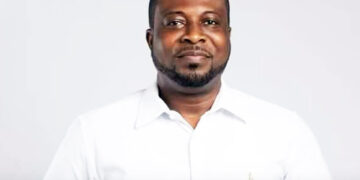
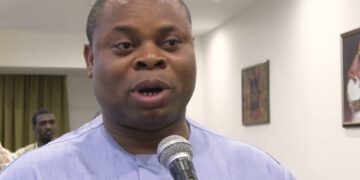















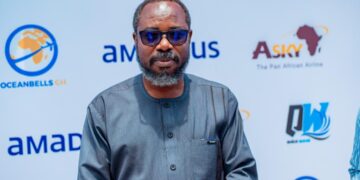



President of the Private Newspapers and Online News Publishers Association of Ghana (PRINPAG), David Tamakloe, has cautioned against equating social media activities with professional journalism, describing what he called the “madness” on social media as fundamentally different from responsible journalism.
According to Mr Tamakoe, the rapid growth of digital platforms should not be used as justification to undermine the traditional media or disregard the professional standards that have guided journalism over the years.
“The madness we witness on social media is NOT journalism,” he declared.
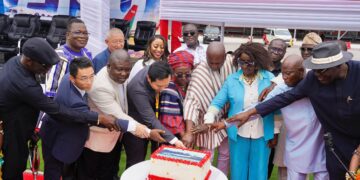
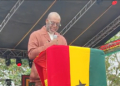
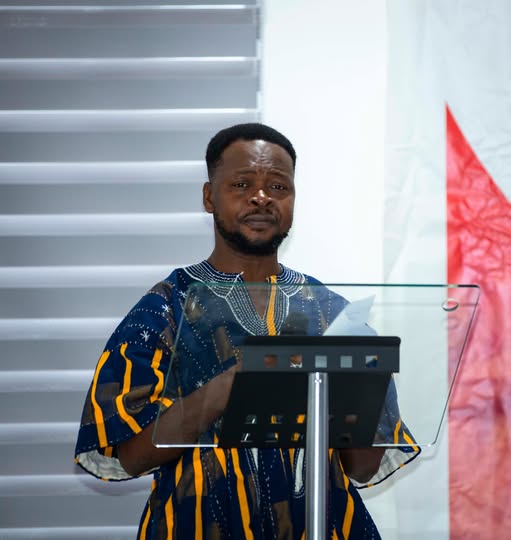
Mr Tamakoe made the remarks on Saturday, August 29, 2026, when he delivered the welcoming address at a Capacity-Building Workshop on “Responsible Security Reporting” held at the Platinum Bay Hotel in Abokobi, Accra.
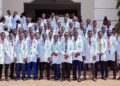
The workshop, organised in collaboration with the National Security Council Secretariat under the theme “Media as a Strategic Partner in National Security,” brought together security experts, journalists, media executives and selected members of PRINPAG.
The training is aimed at strengthening the capacity of private newspapers and online news publishers to report accurately, responsibly and professionally on contemporary security issues.
Journalism must remain professional
Mr Tamakoe argued that journalism remains a noble profession that has played a critical role in promoting democracy, exposing wrongdoing and documenting events that shape society.
He warned that the increasing influence of social media must not lead to the abandonment of professional journalistic standards.
“There is no alternative to the traditional media. The media is only one—it has always been one, and it will always remain one,” he said.
He stressed the need for journalists and media organisations to protect the integrity of the profession by prioritising accuracy, responsibility, professionalism and the national interest.
Calls for stronger support for private media
The PRINPAG President also called for greater investment and support for the private media, arguing that a strong democracy requires a well-resourced and independent press.
He said media organisations are often expected to play critical roles in national development and security awareness despite operating with limited resources.
Mr Tamakoe therefore appealed to the National Security Council Secretariat and other allied institutions to deepen their partnership with PRINPAG and provide opportunities that would strengthen the capacity of media practitioners.
“Let us provide the ink through funding, through regulation, and through partnership,” he said.
He further called for appropriate regulation to protect the credibility of the media industry, stressing that regulation should be designed to strengthen journalism without undermining freedom of expression.
PRINPAG’s role in Ghana’s democracy
Mr Tamakoe used the occasion to highlight PRINPAG’s contribution to Ghana’s media landscape, noting that the association has existed since 1991 and has played a role in promoting professional standards within the private press.
He said PRINPAG has served as a platform for peer review and has supported media practitioners despite the financial challenges confronting the industry.
He urged journalists to uphold ethical standards, particularly when reporting on sensitive security matters, where inaccurate or irresponsible reporting could have serious consequences for national cohesion and public safety.
Responsible security reporting
The President congratulated the selected PRINPAG members participating in the workshop and encouraged them to serve as ambassadors of the knowledge gained during the training.
He urged participants to share their experiences and lessons with colleagues in their respective newsrooms to help improve security reporting across the media landscape.
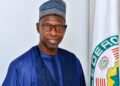
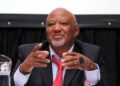
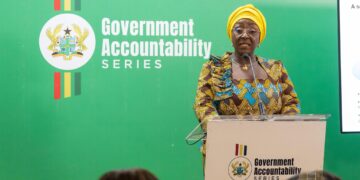
The workshop brought together the National Security Coordinator, COP Razak Osman, Deputy National Security Coordinator, Major General (Rtd) Ayamdo, Deputy Minister for Government Communications, the Venerable Shamima Muslim, Senior Lecturer at the University of Media and Development Studies, Lawyer Zakaria Tanko Musa, representatives of the Cyber Security Authority, officials of the National Security Council Secretariat, veteran journalists and media executives.
Mr Tamakoe expressed gratitude to the National Security Council Secretariat for partnering with PRINPAG to organise the capacity-building programme.
He said stronger collaboration between security agencies and the media would contribute to better public awareness, national cohesion, democratic governance and public safety.
He ended his address by calling on media practitioners to defend the honour of journalism and ensure that truth, professionalism and responsibility remain at the heart of the profession.
“Together, let us shape the future of journalism, defend its honour, and ensure that truth never goes out of fashion,” he said.