
































Chief Executive Officer of the National Youth Authority (NYA), Osman Abdulai Ayariga, has called for greater participation of young people in Ghana’s governance and decision-making processes.
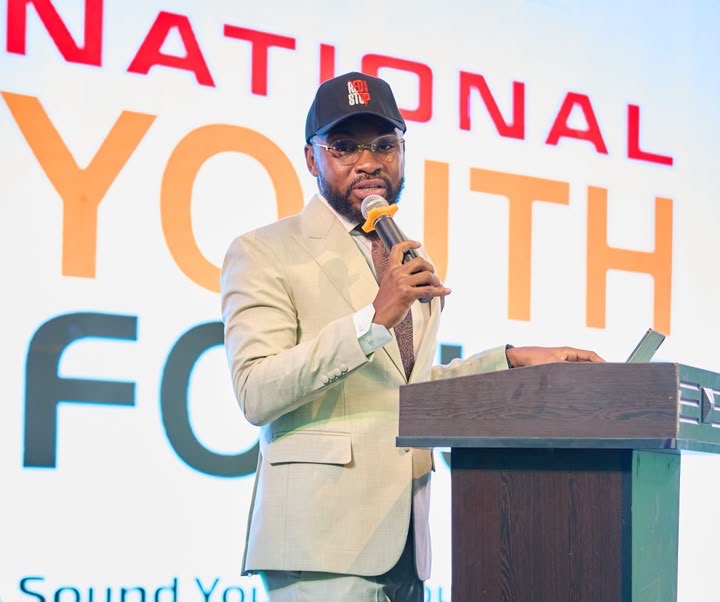
Speaking at the National Youth Forum, Mr. Ayariga said young people must not be treated merely as beneficiaries of government programmes but should be active participants in designing, implementing and monitoring policies that affect their lives.
He said the National Youth Authority’s mandate under the National Youth Authority Act, 2016 (Act 939), goes beyond organising programmes for young people and requires the institution to facilitate their effective participation in national development.
“We cannot continue to design youth programmes without youth voices,” Mr. Ayariga said.
According to him, the Authority has introduced a number of initiatives aimed at strengthening youth representation and participation in governance.
He cited the establishment of the Ghana Youth Federation in 2025 as one of the key steps taken to create a non-partisan, youth-led apex body that brings together youth groups, student unions, faith-based organisations and other youth constituencies.
Mr. Ayariga said the Federation is expected to provide a collective platform through which young people can engage government, policymakers, development partners and other stakeholders.
He also disclosed that the Authority has begun establishing Regional and District Youth Committees, with support from the United Nations Population Fund (UNFPA), to coordinate youth development activities at the decentralised level.
“These structures bring together government departments, youth organisations, persons with disabilities and other stakeholders to coordinate, plan and monitor youth development at the decentralised level,” he explained.
The NYA CEO said the Authority has also organised regional listening sessions across the country, allowing young people to identify challenges and propose solutions in areas including education, employment, agriculture, trade and the environment.
He said the outcomes of those engagements informed a high-level Ministerial Youth Dialogue held under the theme “Accountability, Policy and Youth-Led Solutions for National Development.”
Mr. Ayariga stressed that meaningful youth participation must go beyond inviting young people to attend conferences and forums.
“Our message to Ghanaian youth therefore remains clear: you must have a place at the decision-making table. Not simply because you are young, but because you have ideas, experiences and perspectives that are essential to building the Ghana we want,” he said.
He also highlighted the Authority’s work on Ghana’s National Action Plan on Youth, Peace and Security, anchored on United Nations Security Council Resolution 2250.
According to him, the initiative seeks to strengthen the role of young people as agents of peace, conflict prevention and community resilience.
Mr. Ayariga said consultations involving young people and other stakeholders have been held with support from institutions including the Kofi Annan International Peacekeeping Training Centre, GIZ, UNFPA, UNDP, the European Union, WANEP and the National Peace Council.
He noted that young people must not be viewed only as potential victims or perpetrators of conflict but as important partners in building peaceful and resilient communities.
The NYA CEO further called for greater inclusion of young people with disabilities and other marginalised groups in national youth development programmes.
He said the establishment of the Ghana Network of Youth with Disabilities is intended to amplify the voices of young people with disabilities and strengthen their participation in advocacy, leadership, skills development and entrepreneurship.
Mr. Ayariga maintained that Ghana’s youth development agenda must ensure that no young person is excluded because of disability, gender, location or socioeconomic circumstances.
“Youth development is not simply a social responsibility. It is an economic imperative, a governance imperative and a national development imperative,” he said.
He urged stakeholders to create an environment where young people can contribute meaningfully to national development, stressing that the future of Ghanaian youth should not be postponed.
“Ghanaian youth are not waiting for the future; they are already shaping it. Our collective responsibility is to give them the opportunities, tools and platforms to shape it well,” Mr. Ayariga added.