




























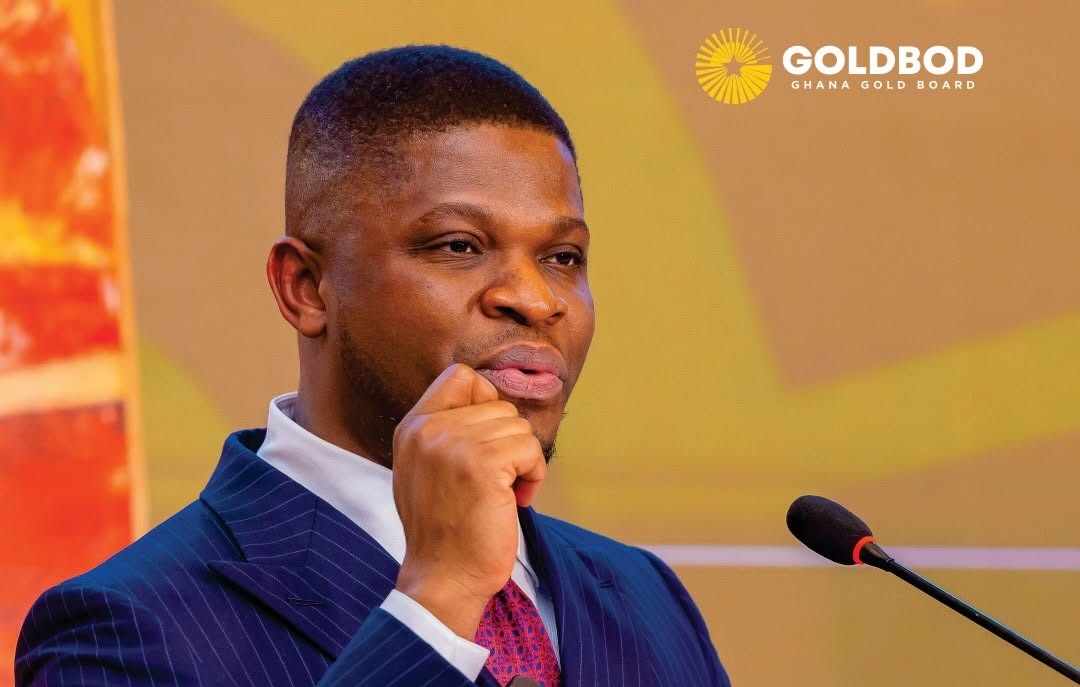
GoldBod to Expand Local Refining, ASM Support and Gold Ownership – Sammy Gyamfi
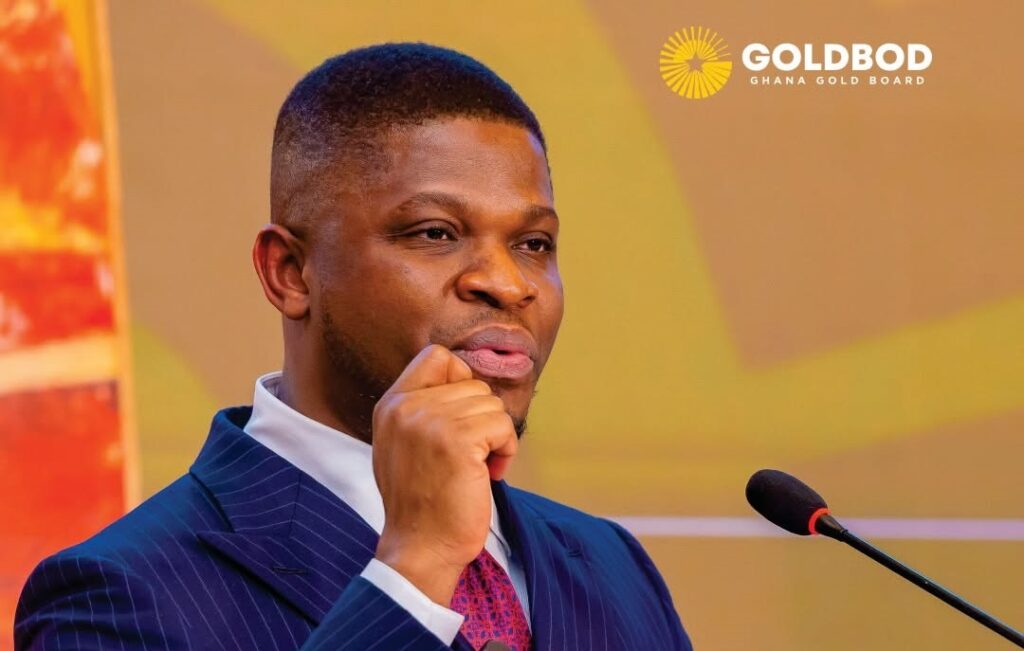
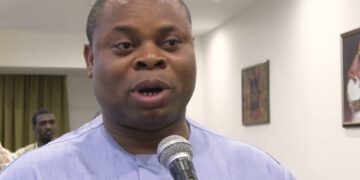
The Ghana Gold Board (GoldBod) is set to intensify efforts to increase local refining, support artisanal and small-scale miners, promote indigenous ownership and retain more value from Ghana’s gold resources, its Chief Executive Officer, Sammy Gyamfi, has announced.
Mr. Gyamfi said the initiatives formed part of a broader government agenda to transform Ghana from an economy focused largely on mineral extraction into one that captures greater value across the mining value chain.
He made the announcement on Tuesday, August 18, 2026, at the National Mining Dialogue in Accra, where he delivered the keynote address on the theme, “Rethinking the Social Licence to Operate.”
According to him, GoldBod has already exported about 170 tonnes of artisanal and small-scale mining (ASM) gold through formal channels since its establishment, generating more than US$17 billion in foreign exchange for the country.
He said the development had contributed to foreign exchange market stability, strengthened Ghana’s reserves and increased the country’s ability to benefit directly from its mineral wealth.
Mr. Gyamfi said GoldBod was also working to change Ghana’s longstanding dependence on offshore gold refining.
He disclosed that nearly nine tonnes of gold aggregated by GoldBod had been refined locally in 2026, creating jobs and retaining refining-related economic benefits within the country.
He further announced plans for the establishment of a Ghana Gold Village in partnership with the private sector.
The project, which will be led by GoldBod Jewellery Limited, is expected to provide a platform for jewellery manufacturing, gold fabrication, skills development, entrepreneurship and access to international markets for Ghanaian gold products.
Mr. Gyamfi also disclosed that GoldBod was preparing to roll out a gold tokenisation programme in 2027 to promote fractional ownership of Ghana’s gold resources by citizens and Africans.
He said the initiative would create opportunities for people with modest financial resources to participate in gold-backed investment opportunities.
“The objective is simple: we must all own and share in the mineral wealth of our nation,” he said.
On artisanal and small-scale mining, Mr. Gyamfi said GoldBod, in collaboration with the Ministry of Lands and Natural Resources, the Minerals Commission and RCOMSDEP, would commence an ASM Formalisation and Financing Support Programme in 2027.
The programme is expected to support artisanal miners to transition into legal, responsible and OECD-compliant operators through regulatory compliance, capacity building, concession viability support, equipment financing and mining services.
He said GoldBod would also support responsible ASM operators with appropriate hard-rock mining equipment under repayment arrangements designed to increase gold production while reducing environmental risks.
Mr. Gyamfi announced that GoldBod was in the process of procuring a technology-driven traceability system to strengthen responsible sourcing and accountability within the gold sector.
A National Competitive Tendering process for the system, he said, was already underway.
On environmental protection, he disclosed that GoldBod had commenced the reclamation of 50 hectares of degraded land in the Tano Nimri Forest Reserve, with plans to extend the programme to another 100 hectares of devastated forest land in 2027.
He also said GoldBod was fully funding the rehabilitation of three water treatment plants operated by Ghana Water Limited.
The Daboase, Sekyere Hemang and Bonsa plants serve more than 76 communities and approximately 100,000 users in the Western and Central Regions.
Mr. Gyamfi said GoldBod would also fund the rehabilitation of three additional water treatment plants at Kwanyako, Baifikrom and Essagyir next year.
He further announced plans for the construction of an ultra-modern, ISO-certified National Assay Laboratory at the Aviance Cargo Village at the Accra International Airport.
Construction is expected to commence by November 2026, with the facility expected to improve the accuracy of gold valuation and address purity losses and under-declaration of mining revenues.
According to Mr. Gyamfi, architectural drawings and bills of quantities for the project had been completed, while procurement was underway to select a contractor.
He said GoldBod was also working with the Ghana Geological Survey Authority to conduct geological studies in mineralised areas as part of efforts to reduce investment risks and promote greater Ghanaian participation in mine ownership.
Geological investigations are currently ongoing at Funsi in the Upper West Region and Bensere in the Ashanti Region.
The studies, he explained, would help develop investment-grade mineral assets and strengthen Ghana’s position in negotiating equity participation in future mines.
Mr. Gyamfi also said Ghana was increasing local acquisition of gold from large-scale mining companies, with the proportion moving from the earlier 20 percent offshore acquisition arrangement to 30 percent local acquisition.
He said gold acquired from large-scale mining companies under the Ghana Accelerated National Reserve Accumulation Programme would be refined locally effective July 1, 2026.
According to him, the initiative would support local refineries and help position Ghana on the path towards London Bullion Market Association (LBMA) certification for local refineries.
He said these measures were part of a broader effort to ensure that Ghana’s mineral wealth generated greater economic value, employment and opportunities for its citizens.
“Production without ownership is limited. Production without value addition is leakage. Production without community transformation is a broken social contract,” Mr. Gyamfi said.
He maintained that the future of Ghana’s mining sector must be built around greater local ownership, environmental protection, value addition and meaningful participation of mining communities.
He said the ultimate goal was to create a mining economy capable of producing not only gold but also jobs, industries, prosperous mining towns and sustainable opportunities for the Ghanaian population.