




















Actress and businesswoman Selassie Ibrahim has been linked to the controversial GH¢3.6 million contract for the branding of 116 Metro Mass Transit (MMT) buses during the National Democratic Congress (NDC) administration.
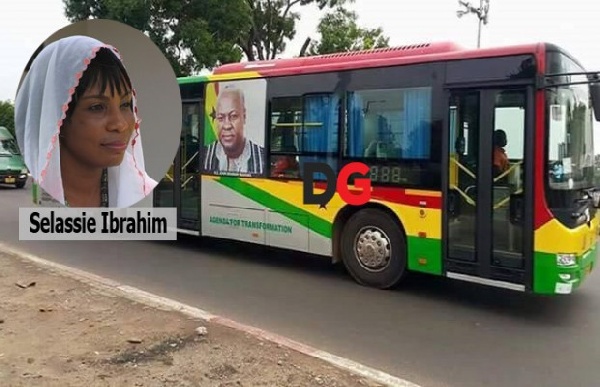
Details emerging from documents cited in media reports indicate that Smarttys Management and Productions, a company reportedly associated with Selassie Ibrahim, submitted a pro-forma invoice for the work to the then Minister of Transport, Dzifa Attivor.
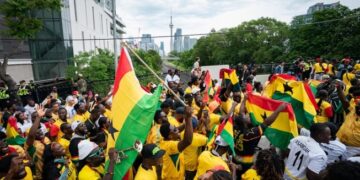
The invoice, dated July 17, 2015, reportedly outlined the various costs involved in branding the 116 buses, which were decorated in Ghana’s national colours and carried portraits of President John Mahama and former Ghanaian presidents.
According to the document, the material cost for spraying each bus in red, yellow and green was pegged at GH¢14,210, while labour for the spraying was estimated at GH¢3,000 per bus.
Additional charges reportedly included GH¢1,210 for clear coating and GH¢2,000 for labour associated with fixing stickers on each bus.
The total cost attributed to the branding of each vehicle was reported at GH¢30,420, contributing to the overall contract value of approximately GH¢3.6 million.
The deal triggered public outrage and demands for an investigation, with critics questioning why such a substantial amount of taxpayers’ money was spent on branding the buses.
Critical Thinkers International, a group advocating accountability and good governance, called for an audit into the contract and urged the Auditor-General and Parliament’s Public Accounts Committee to investigate the expenditure.
The group argued that the reported cost was excessive, particularly given the economic difficulties facing the country at the time.
The controversy also became a subject of political debate in Parliament, with the then Minority Leader, Osei Kyei-Mensah-Bonsu, questioning the cost of the project and accusing the government of presiding over questionable expenditure.
Then Transport Minister Dzifa Attivor, however, defended the expenditure, reportedly arguing that the artistic work involved in branding the buses was expensive.
The emergence of the pro-forma invoice subsequently intensified scrutiny of the deal, with questions being raised over the procurement process, the actual cost of the work and whether the state received value for money.
While the documents reportedly linked Smarttys Management and Productions to the contract, the controversy centred on whether the amount paid represented a reasonable cost for the work undertaken.
The GH¢3.6 million MMT branding controversy has since remained one of the widely discussed examples of public expenditure that attracted demands for greater transparency and accountability.