


























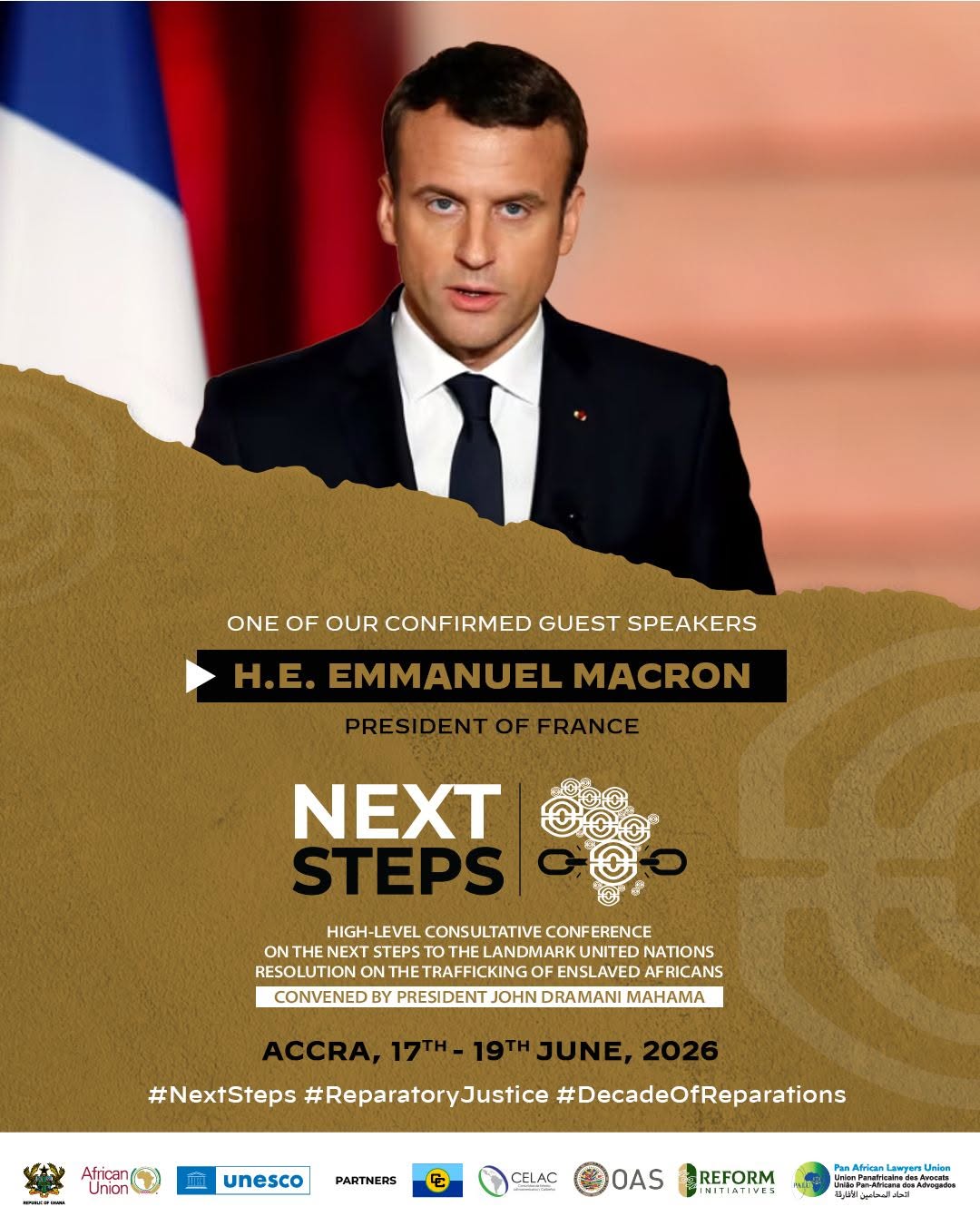
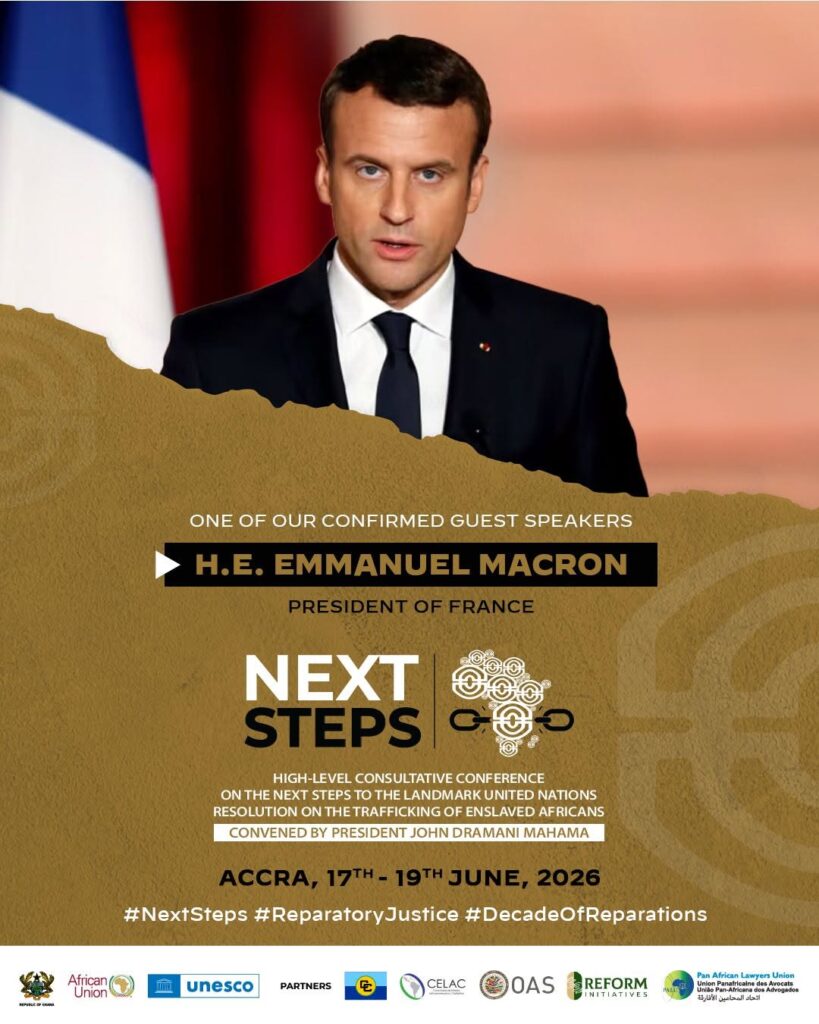
In a major diplomatic development for the global reparations movement, French President Emmanuel Macron is scheduled to address a high-level summit on historical accountability in West Africa. The French head of state will participate in the upcoming Next Steps Conference on Reparatory Justice in Ghana, marking a significant shift in how European powers engage with the legacy of colonial-era exploitation.
The announcement signals a growing international willingness to debate institutional accountability for historical injustices, particularly those linked to the transatlantic enslavement of Africans. By joining the dialogue, Paris enters a complex geopolitical conversation that African nations have championed for decades.
A high-level diplomatic mobilization
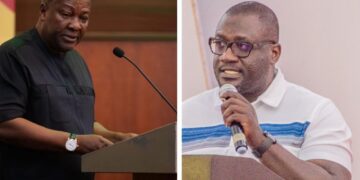
The framework of the upcoming summit was revealed via an official state communication early this week. “The Government of Ghana confirms that the President of France will address the Next Steps Conference on Reparatory Justice being hosted in Accra by President Mahama,” said Ghana’s Minister for Foreign Affairs, Samuel Okudzeto Ablakwa, in a post on social media on Tuesday.
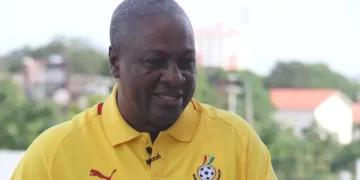
The high-stakes diplomatic gathering is officially scheduled to take place over three days, running from June 17 to June 19, 2026. Hosted by President John Dramani Mahama, the event will bring together an international assembly of heads of state, foreign ministers, jurists, and civil rights advocates. The multi-day program will focus heavily on advancing global discussions on reparatory justice for historical injustices, particularly those linked to the transatlantic enslavement of Africans. Observers note that the presence of a G7 leader elevates the platform in Accra from a regional advocacy forum to a critical arena for North-South diplomacy.
Parameters of the Anglo-French dialogue
French officials have indicated that Macron’s address will not merely be symbolic but will instead outline explicit state perspectives on the issue. According to the Minister, “President Macron is expected to welcome a good faith dialogue on historical injustice against Africans and outline France’s commitment to Reparatory Justice following the landmark adoption of the Ghana-led UN resolution declaring the transatlantic enslavement as the gravest crime against humanity.”
The French presidency has faced escalating pressure from domestic civil rights groups, Caribbean overseas territories, and African partners to formalize its stance on colonial-era wrongs. This push has led to concrete bilateral concessions. Before the summit, France committed to supporting a joint Ghana-France Research Commission on Slavery in Accra and announced intentions to formally repeal the historic Code Noir—the notorious 17th-century decree that regulated the treatment of enslaved people across French colonies. While Paris has previously supported the restitution of looted cultural artifacts, entering a direct dialogue regarding broader reparatory frameworks in Accra represents a distinct policy evolution.
The UN catalyst and regional context
The momentum driving the Accra summit stems directly from recent legislative successes achieved by African delegations on the international stage. The engagement comes in the wake of the adoption of a Ghana-led United Nations resolution, which recognised transatlantic enslavement as the gravest crime against humanity, a development that has renewed international discourse on reparations and historical accountability.
The passage of that resolution altered the legal and moral landscape of international relations, providing African states with a structured multi-lateral mandate to pursue diplomatic engagement. The upcoming assembly in Accra seeks to convert that symbolic UN victory into actionable institutional policy.
Continental leadership and the ten-year mandate
The choice of Accra as the epicenter for this dialogue aligns with Ghana’s expanding mandate under the African Union. The summit takes place as the African Union enters its designated decade of “Justice for Africans and People of African Descent Through Reparations,” running from 2026 through 2036. President John Dramani Mahama serves as the official African Union Champion on Reparations, establishing Accra as the structural headquarters for continental advocacy. Local civil society organizations note that the state-level convergence provides a unique platform to shift regional grievances into a cohesive continental strategy.
Implementation and global outcomes
As delegations finalize the summit agenda, organizers emphasize that the gathering aims to move beyond rhetoric toward tangible policy outcomes. The Accra conference is expected to bring together global leaders, policymakers, and stakeholders to explore practical steps towards addressing historical wrongs and advancing justice-focused dialogue at the international level.
With major state figures assembling in Accra, the conference is poised to test whether European nations and African states can reconcile diverging views on historical repair, structural inequality, and global systemic reform. While African nations approach the negotiation table viewing financial and structural restitution as a fundamental right, European capitals often seek to limit liability to moral apologies and developmental partnerships. The success of the Accra summit will ultimately depend on whether these fundamentally conflicting perspectives can find common ground.