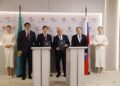
































President John Dramani Mahama has held high-level discussions with senior executives of Boeing in New York as Ghana advances plans to revive its national airline and build a stronger aviation industry.
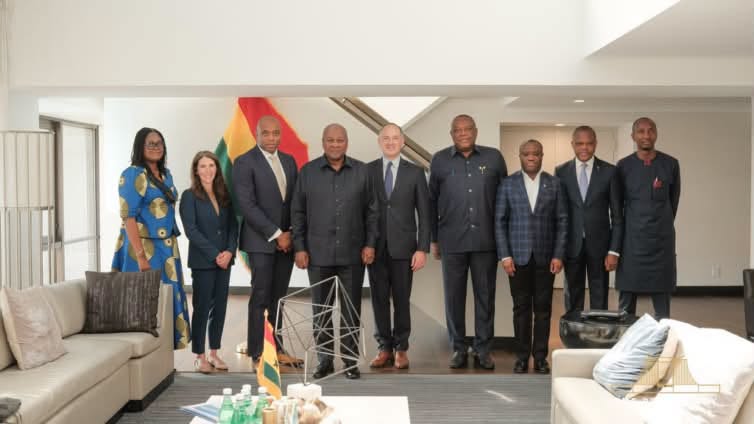
The meeting, held on the sidelines of the 81st United Nations General Assembly, forms part of broader engagements between the Government of Ghana and Boeing aimed at developing a strategic aviation partnership.
The discussions followed months of engagement initiated by Ghana’s Ambassador to the United States, H.E. Victor Emmanuel Smith, and his team, including an earlier visit to Boeing and subsequent discussions on opportunities for deeper cooperation.
President Mahama emphasised that Ghana’s interest in working with Boeing goes beyond the acquisition of aircraft.
“Ghana does not want its relationship with Boeing to be defined simply by the purchase of aircraft. We want a strategic partnership that helps us build an aviation ecosystem—creating skilled jobs, transferring technology, strengthening our industrial base and positioning Ghana as an aviation and logistics hub for West Africa,” he said.
The President added that, as part of the government’s Reset Ghana agenda, the country was seeking international partners willing to invest, build capacity and participate in Ghana’s long-term economic development.
The discussions therefore focused on a broader aviation partnership that could support the revival of Ghana’s national carrier while developing the infrastructure, technical expertise and human capital needed to sustain a competitive aviation industry.
A key area of discussion was the development of the national carrier and its fleet, including technical support and guidance towards putting Ghana’s airline back in the skies.
The two sides also explored the potential establishment of a regional Maintenance, Repair and Overhaul (MRO) hub in Ghana. Such a facility could serve airlines operating across West Africa and the wider African continent while creating opportunities for technical training and high-value employment.
Aviation training, skills development and technology transfer also featured prominently in the discussions, with a focus on creating opportunities for young Ghanaians and strengthening the country’s technical capacity.
Boeing expressed its readiness to work closely with the Government of Ghana as the national carrier project progresses. The company indicated that, subject to the necessary structures and implementation arrangements being put in place, Ghana’s ambition of returning a national airline to the skies within approximately 18 months could be achievable.
The proposed partnership is aligned with President Mahama’s broader Reset Ghana agenda, which seeks to attract strategic international investment, create sustainable employment, strengthen local technical capacity and position Ghana as a competitive gateway for trade, aviation and logistics in West Africa.
For the government, the national airline project is therefore being presented as more than a return of the Ghanaian flag to the skies.
The broader objective is to develop an aviation ecosystem capable of supporting tourism, trade, regional connectivity, technical skills development and long-term economic transformation.
With the engagement with Boeing now advancing, Ghana’s ambition to restore a national carrier is entering a new phase, with the government seeking to combine the return of a national airline with wider opportunities across the aviation sector.