





























The Ghana Revenue Authority (GRA) and Customs Division have begun hearing reports of containers allegedly smuggled from the Tema Port, with multiple inquiries underway to determine the exact number of missing containers, the value of the goods involved, and the revenue potentially lost to the state.
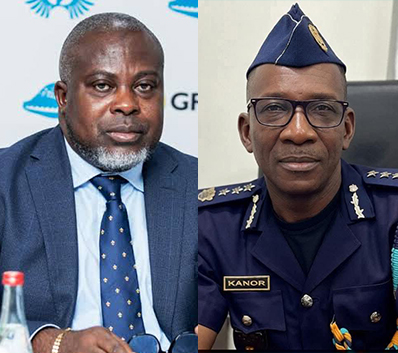
The development came to the fore at a high-level meeting held at the GRA Headquarters in Accra on Saturday, September 26, 2026, attended by GRA Commissioner-General Anthony Sarpong and Acting Commissioner of Customs Aaron Kanor.
Also present were the Acting Deputy Commissioner in charge of Operations, Theresa Potakey, and the Acting Deputy Commissioner in charge of Post Clearance Audit, Alphonse Quainoo.
Reports have linked the missing containers to the activities of Prince Awudu, whom some importers and clearing agents identify as the Chairman of the Confiscated Assets Committee. He has denied the claim in a short interaction with The Herald.
During Saturday’s confidential meeting, Ibrahim, a clearing agent representing an importer, reported that about 150 containers belonging to his client could not be traced.
According to information presented at the meeting by Ibrahim, their missing containers contained various goods, including ethanol, textiles, and tomato paste, with a substantial portion of the consignments reportedly destined for Burkina Faso.
Ibrahim was asked to return to the GRA Headquarters today, Monday, September 28, to formally file a petition concerning the missing consignments.
The Herald understands that the GRA and Customs have yet to establish the total number of containers allegedly missing from the port, as several other clearing agents and importers have also reportedly raised complaints.
Others who have complained to Customs are clearing agents identified as Zongo and Blay.
Zongo, in particular, is reportedly seeking to account for about 60 containers, up from an initial 16 containers reported as missing.
Aside from potentially depriving the state of much-needed revenue, the development could cause reputational damage to Ghana’s port system if it is established that imported goods cannot be adequately secured.
It could also pose significant risks for insurance companies underwriting cargo passing through the port.
Others have raised concerns about the diplomatic implications of the missing consignments for Ghana and its neighbours, particularly the landlocked countries of Burkina Faso, Mali and Niger, which have for years relied on the Tema Port to import goods into their respective countries.
Interestingly, there are claims that Zongo, Blay, and Ibrahim are fronts for a Burkinabe cartel operating at Tema Port.
The agenda is to find a way to remove the measures imposed by the Mahama government so that the Burkinabe ring can operate again. They are not getting their way to steal the containers, so the agenda is to sabotage the system with these fake stories.
Initial reports suggested that about 25 containers had been removed from the port, but information emerging from the ongoing investigations indicates that the number could be considerably higher.
People familiar with the development told The Herald that the containers contained a wide range of imported goods, including cyanide, sardines, rice, ethanol, tinned tomatoes, condensed milk, black pepper, and wax prints destined for the Sahel Region.
According to insiders, some persons arrested in connection with the alleged removal of the containers initially told investigators that Prince Awudu had instructed them to move some of the containers to Kpone, while the contents of others were to be emptied and their contents sold, and the proceeds taken to his office.
The accounts reportedly changed during questioning.
One of the persons arrested is said to have initially mentioned Prince Awudu but later named Alfred Tutu as the person who allegedly instructed him to move some of the containers and sell the contents of others.
The Herald understands that Alfred Tutu was subsequently contacted and asked to report to the police on Tuesday, September 22, 2026, after investigators encountered difficulty locating him.
Sources told The Herald that, of the approximately 25 containers initially identified, only four had been traced as of Tuesday, September 22.
The remaining containers were allegedly emptied, and their contents can’t be traced.
One source said: “They took 25 containers. Out of the 25, only four have been seen. The rest have been sold.”
The source said the containers were transit cargo and had not incurred demurrage, the charges imposed on cargo that remains at a port beyond the permitted period.
Reports that the goods were allegedly put on sale despite there being no demurrage issue have become a major concern among the affected importers.
One of the most serious concerns arising from the development relates to five containers reportedly carrying cyanide, a hazardous chemical commonly used in gold processing.
According to information gathered by The Herald, only two of the five cyanide containers have so far been found, with the cyanide reportedly still inside.
The whereabouts of the remaining containers and their contents are currently unknown.
The development has raised concerns among some sources that the missing cyanide could have been diverted elsewhere, including potentially into illegal mining operations, commonly known as galamsey.
The concern was heightened by the hazardous nature of cyanide and its use in gold-processing activities.
One of the affected importers, identified by sources as Zongo, is said to have made payments relating to 16 containers on behalf of his client before they were allegedly removed, opened and their contents emptied.
Sources said records relating to some of the containers showed that payments had been made to shipping lines and that relevant port charges had also been settled.
They further alleged that some of the containers had not passed through UCL but were nevertheless removed from the port and offloaded elsewhere.
This has raised questions about how the containers could have been moved without completing the normal Customs and terminal procedures.
Importers are demanding answers on who authorized the removal of the containers, how they were removed from the port, and who received the goods.
The Herald has also learnt that some persons allegedly connected to the removal of the containers have sought the assistance of Customs officials to issue permits that could retrospectively cover the movement of the goods.
Sources said Customs officials had so far refused to issue such permits.
The refusal is said to have frustrated attempts to regularise what the sources described as an illegal removal of the containers.
There are also claims that attempts were made to resolve the matter privately by offering affected importers about US$2 million.
According to sources, the money was rejected.
The allegations have also prompted attempts by some persons to link the operation to Dogbatse, the former Chairman of the Confiscated Assets Committee.
However, several sources familiar with the matter insisted that Dogbatse had no knowledge of the alleged operation and had not returned to the port since his removal from office.
One source, emphatically defending the former chairman, said: “He never does something like this.”
Instead, the name of the current Chairman of the Confiscated Assets Committee, Prince Awudu, has repeatedly surfaced in accounts given by some affected importers and persons familiar with the development.
One Afari has also been mentioned by sources as having links to Prince Awudu.
Questions have also been raised about the role of a terminal manager in the alleged movement of some of the containers.
Some sources claimed that certain containers were removed without following normal terminal procedures and argued that such movement could not have occurred without the knowledge or cooperation of personnel operating within the terminal.
One source alleged: “This is being done together with the terminal manager; they are acting together.”
The allegation has not been independently verified, and it remains for investigators to establish whether any terminal personnel were involved.
The disappearance of the goods has reportedly angered several affected importers, including Chinese traders whose consignments are said to be among those missing.
Sources said some of the Chinese owners of the goods are currently in Ghana and are demanding answers about the whereabouts of their consignments.
The investigations are expected to establish the value of the goods involved, the revenue implications for the state, and whether any duties, taxes, or other charges were evaded.
There are also concerns about the potential diplomatic implications if transit cargo destined for neighbouring countries is found to have been removed and sold in Ghana.
The affected consignments were reportedly destined largely for Burkina Faso, while Ghana’s ports also serve importers and traders from other landlocked countries in the Sahel.
The central questions confronting investigators include who authorized the removal of the containers, how they were taken out of the port, who received the goods, where the missing consignments are, and whether any public officials or private operators assisted in the process.
Of particular concern is the whereabouts of the missing cyanide containers because of the chemical’s hazardous nature and potential use in illegal mining.
The affected importers are also seeking the recovery of their goods or appropriate compensation for their losses.