





























The decision by the National Council for Curriculum and Assessment (NaCCA) to train basic school teachers on a new Chinese language curriculum has raised questions about the status of the proposed curriculum following President John Dramani Mahama’s assertion that no new policy introducing Chinese or Arabic into Ghana’s school curriculum has been approved by Cabinet.
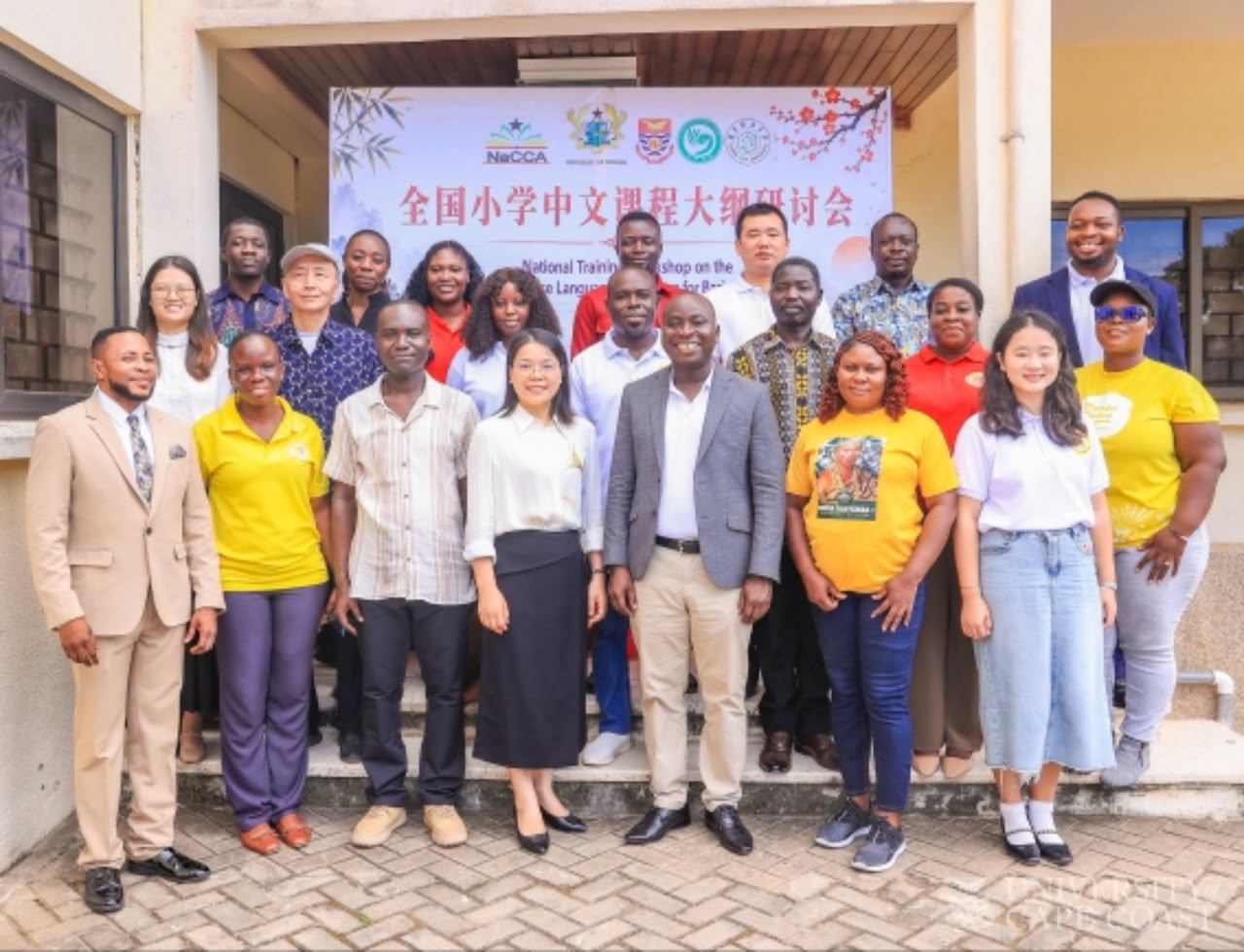
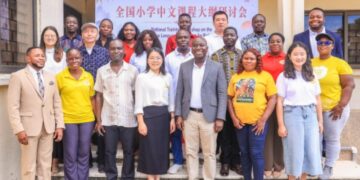
NaCCA, in collaboration with the Confucius Institute at the University of Cape Coast (UCC), recently organised a training workshop aimed at equipping basic school teachers with the knowledge and skills required to implement the new Chinese language curriculum.
The training, held at the Conference Room of the Institute of Education at UCC, included sessions on the background, philosophy and structure of the Chinese curriculum, curriculum content, expected learner proficiency, teaching methods, assessment rubrics and practical teaching activities.
Participants were also taken through the role of Chinese language coordinators in strengthening collaboration among schools, parents and teachers.
The training, however, comes against the backdrop of President Mahama’s recent declaration that no new government policy introducing Chinese or Arabic into Ghana’s school curriculum has been approved by Cabinet.
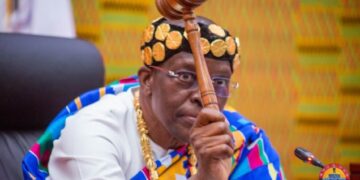
Speaking at a Citizens’ Engagement in Wa on Saturday, September 12, President Mahama said he chaired Cabinet and would know if a new curriculum changing the subjects taught in schools had been approved.
He stated that any curriculum making changes to the subjects taught to Ghanaian children would have to come before Cabinet before becoming official government policy.
The President consequently dismissed claims that Chinese and Arabic had been officially introduced into the country’s school curriculum.
“I chair Cabinet and I can tell you no new curriculum has come for approval by Cabinet,” he said, adding that no policy introducing Arabic or Chinese had been approved by the Cabinet.
Training for implementation
Despite the President’s position, NaCCA’s training programme was explicitly described as being designed to familiarise teachers with the new Chinese language curriculum and strengthen their capacity to implement it.
At the workshop, the Head of Curriculum at NaCCA, Mr Reginald Quartey, took participants through the Kindergarten and Primary Curriculum Review 2026.
A subsequent session led by an official of the Confucius Institute examined the background, philosophy and structure of the new Chinese language curriculum.
Another session dealt with the curriculum content and expected Chinese language proficiency of learners, while a further session focused on teaching approaches and assessment.
Participants were eventually divided into groups to practise teaching and learning activities based on the new curriculum.
The exercise therefore raises an important question: If the President says no new curriculum introducing Chinese has received Cabinet approval, on what basis is NaCCA already training teachers to implement a new Chinese curriculum?
Proposed curriculum
The issue stems from a revised Kindergarten to Primary Six curriculum prepared by NaCCA.
The proposed curriculum reportedly includes 13 subject areas, among them Ghanaian Language, English Language, Chinese, Arabic, French, Religious and Moral Education, Mathematics, Physical Education and Health, Creative Arts, Citizenship Education, Computing and Science (Agriculture).
The revised curriculum was submitted to the Minister of Education, Haruna Iddrisu, on July 22, 2026.
The Minister subsequently tasked the Ghana Education Service (GES) to review the curriculum and submit it for full implementation readiness and quality assurance.
The Education Ministry has also clarified that Chinese, Arabic and French would not be compulsory under the proposed curriculum, but would remain optional at the upper primary level.
This distinction, however, does not fully resolve the question surrounding the NaCCA training exercise.
While the training could represent preparatory work on a curriculum that is still undergoing review and approval, its explicit focus on implementing the new Chinese curriculum appears to put the exercise at odds with the President’s assertion that no such curriculum has been approved as official government policy.
Calls for clarification
The development raises questions about whether NaCCA is acting within the existing curriculum approval process and whether the teacher training forms part of preparatory activities that can take place before final Cabinet approval.
It also raises questions about the exact status of the revised curriculum submitted to the Education Minister and whether any portion of it has received the necessary approvals for implementation.
NaCCA and the Education Ministry would therefore need to clarify whether the training is simply preparatory, whether schools are currently authorised to teach Chinese under the proposed framework, and whether the revised curriculum has progressed to the stage where implementation can formally begin.
Until those questions are answered, the apparent disconnect between the President’s declaration that “no such policy has been approved” and NaCCA’s training of teachers to implement a “new Chinese language curriculum” is likely to continue generating public concern and debate.