


































The Minister for Communication, Digital Technology and Innovations, Samuel Nartey George, has called for the upgrading of all Rural Telephony sites across Ghana to a minimum of 4G.

According to the Minister, Ghana must move beyond providing rural communities with basic 2G and 3G connectivity, particularly at a time when the global telecommunications industry is advancing towards 5G and 6G technologies.
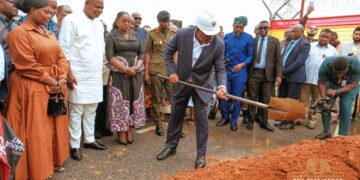
Mr. George made the call during an inspection of Rural Telephony projects in the Eastern Region, where he assessed ongoing efforts to expand telecommunications infrastructure and improve connectivity in underserved communities.
He said upgrading the existing sites would provide rural residents with faster and more reliable internet services, improve the quality of mobile communications and enhance the overall customer experience.
The Minister also noted that improved infrastructure would help reduce network congestion and support the growing demand for digital services across the country.
“My challenge is that in today’s day and age, we say we’re connecting communities, and we give them 2G, 3G. The world has moved from 5G to 6G. So at least, we must give 4G to our network,” he said.
Mr. George stressed that telecommunications infrastructure must be treated as an essential part of national development, just like roads, hospitals and other critical infrastructure.
He argued that as government continues to invest heavily in physical infrastructure, similar attention must be given to digital connectivity to ensure that rural communities are not excluded from Ghana’s digital transformation.
“My view on rural telephony is that at least we must give them 4G. As a country, we need to make a decision. We’re investing in roads, hospitals; we must invest in telecom, and we must decide to convert all rural telephony sites to a minimum of 4G and be ready for 5G as well,” he added.
The Minister said the proposed upgrade forms part of government’s broader strategy to bridge the digital divide and ensure that people living in underserved and remote communities have access to quality telecommunications services.
He explained that modernising rural telephony infrastructure would not only improve communication but also create opportunities for digital education, businesses, mobile financial services and other technology-driven activities in rural areas.
The inspection in the Eastern Region is part of efforts by the Ministry to monitor the development of telecommunications infrastructure and identify areas requiring further investment and improvement.
Mr. George reiterated government’s commitment to ensuring that no community is left behind as Ghana accelerates its digital transformation agenda.