
























On 25 March, the United Nations General Assembly did something it had been asked to do for the better part of a century, when it declared the trafficking of enslaved Africans and the racialised chattel enslavement that followed to be the gravest crime against humanity.
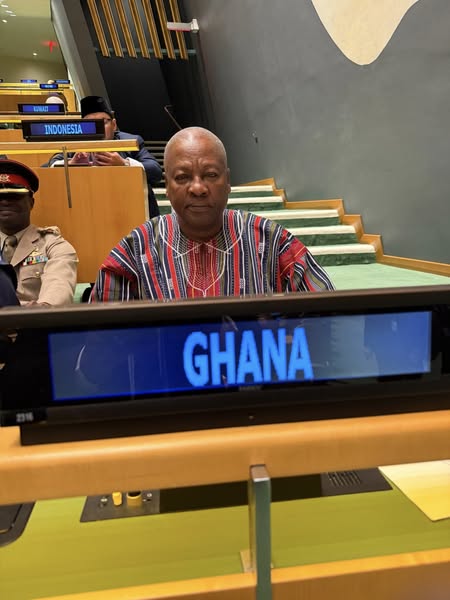
One hundred and twenty-three nations voted in favour, three voted against, and 52 abstained – and while the resolution carries no army, levies no fine and binds no treasury, what it does carry is rather more durable. It places on the international record, in language that admits no retreat, an acknowledgement that four centuries of organised human dispossession were, in fact, a crime, and that the obligations a crime generates do not expire because its victims are no longer here to file the claim.
The morning after the vote, Ghanaians who had watched the proceedings from the corridors of the UN headquarters and from living rooms along our coastline reached, almost in unison, for the same question: And now what?
That is the question to which the High-Level Conference on Reparatory Justice, which Ghana will host in Accra from 17 to 19 June, has been convened to answer.
Legal architecture, institutional mechanisms
There is a familiar pattern by which the international community has tended to honour difficult truths. A resolution is passed, statements are made, an anniversary is observed, and the agenda drifts gently toward more comfortable matters until the next round of speeches a decade later. Ghana has resolved that Resolution A/RES/80/250 will not follow that pattern.
The vote in March was the easier part. The harder work, which begins in Accra, is the work of translating moral recognition into operational substance: common frameworks, named commitments, institutional architecture, and the patience to build them on a timeline measured in years rather than in generations.
Not a victory lap
The conference is not a victory lap. It is an invitation, extended in good faith to every government that voted in favour, to every government that abstained, and to every government that voted against. Ghana bears no grudge against any nation whose vote differed from our own.
The considerations that produced 52 abstentions and the legal anxieties of those who voted no deserve to be addressed, and they are best addressed in a room where the conversation is structured, the participants are credentialled, and the outcome document is built rather than declaimed. That is the room Accra is preparing.
The work on the table at the conference is concrete. There is the legal architecture that will translate the obligations the resolution affirms, restitution, compensation, rehabilitation, satisfaction and guarantees of non-repetition, into operational substance.
There are institutional mechanisms that will determine how national reparations commissions: the African Union’s Decade of Action on Reparations, the AU-CARICOM Caribbean coalition and the United Nations system relate to one another.
Like political independence, it must be asserted, pursued and secured through determination and unityThere is cultural restitution, on which Germany and the Netherlands have set an early example, for which we are grateful. There is the long work of education and historical research, without which acknowledgement decays into ceremony. There is the question of financing, on which honest engagement is overdue.
This, as President John Mahama has been at pains to clarify, is not a development appeal arriving under unfamiliar cover. It is a claim grounded in existing law, anchored in the lived inheritance of more than 12.5 million human beings whose names we will never know, and pursued with the seriousness their memory demands.
‘Reparatory justice will not be handed to us’
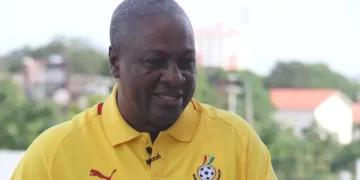
That this conversation is being convened at all, and convened with the seriousness it deserves, is owed in no small measure to the persistence and moral clarity of President Mahama, who has carried this cause as African Union Champion for Reparations and who will host the world in Accra in June. “Reparatory justice will not be handed to us,” the president has said. “Like political independence, it must be asserted, pursued and secured through determination and unity.”
There is one moment in the programme I commend with particular care. On 19 June, at Christiansborg Castle in Osu, Ghana, will host the first-ever joint Juneteenth commemoration on African soil, held with our brothers and sisters from the diaspora on the very ground from which their ancestors were trafficked.
To stand there on that day, in the company of descendants whose freedom was won two centuries and an ocean away from where their forebears were taken, is to hold, at once, the wound and the possibility of its healing. It is the moment in our programme that Accra has most carefully prepared for the world, and the spirit in which the Year of Return brought so many home will sit with us in that courtyard.
We expect heads of state and government, foreign ministers, jurists, historians, and representatives of international organisations and the diaspora coalition, drawn from every region. The door is open and the welcome is sincere.
The conversation has been under way for 400 years. If four centuries do not constitute sufficient time to build a consensus, the question is no longer how long consensus takes, but whether our generation is willing to be the one that finally builds it.
Generations are remembered for the questions they were equal to. In June, in Accra, the world has the chance to be equal to this one.