

































The Majority in Parliament has strongly defended the Bank of Ghana (BoG) over its reported GH¢9.57 billion gain from gold transactions in 2025, rejecting claims by the Minority that the figure was used to conceal financial distress.
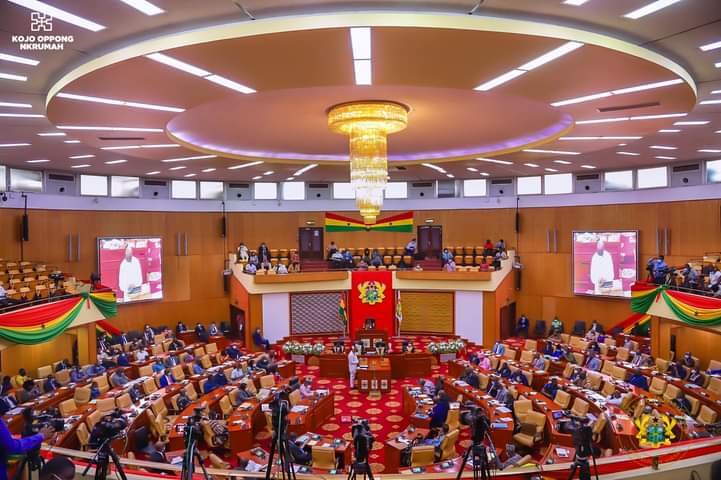
In a statement issued on Sunday, May 3, 2026, the Majority described the Minority’s assertions as misleading and based on a misinterpretation of technical financial data. The response was led by Atta Issah, Member of Parliament for Sagnarigu and a member of the Finance Committee.
“The characterization of the GH¢9.6 billion as a falsehood simply because it arises from gold transactions is misleading,” the statement said.
The Minority had earlier argued that the central bank is “policy insolvent,” claiming that without the one-off gains from gold, the BoG would have recorded an operational deficit of about GH¢4 billion. It further alleged that the Bank had sold as much as 50 percent of its gold reserves in a bid to artificially strengthen its financial position.
However, the Majority dismissed these claims, insisting that gold transactions are a normal part of central bank operations. According to the caucus, reserve management typically involves adjusting holdings between gold, foreign currencies, and other financial instruments to ensure liquidity, safety, and optimal returns.
“Gains from such portfolio management are legitimate income. They are not fake because they are not recurring every year. Non-recurring does not mean illegitimate,” the statement emphasized.
Addressing the issue of “policy insolvency,” the Majority argued that central banks cannot be assessed using the same criteria as commercial institutions. It noted that solvency should be evaluated based on the overall balance sheet, including reserves, revaluation buffers, and sovereign backing—not just annual operating results.
The caucus also rejected suggestions that the BoG had engaged in distress sales of its gold reserves.
“The audited statements do not show any distress liquidation. What they show is measured portfolio adjustment,” the statement stressed.
It further pointed out that Ghana has, in recent years, implemented policies aimed at increasing its gold reserves through domestic purchase programmes. This, the Majority argued, contradicts claims that the Bank is depleting its reserves due to financial weakness.
The statement concluded that the central bank’s actions should be viewed within the broader context of ongoing macroeconomic challenges, including debt restructuring, exchange rate volatility, and tightening global financial conditions.
“This is not evidence of collapse. It is evidence of management under pressure,” the Majority said.