



































…MCEs, MPs, others accused of inaction on pollution, flooding, health fears
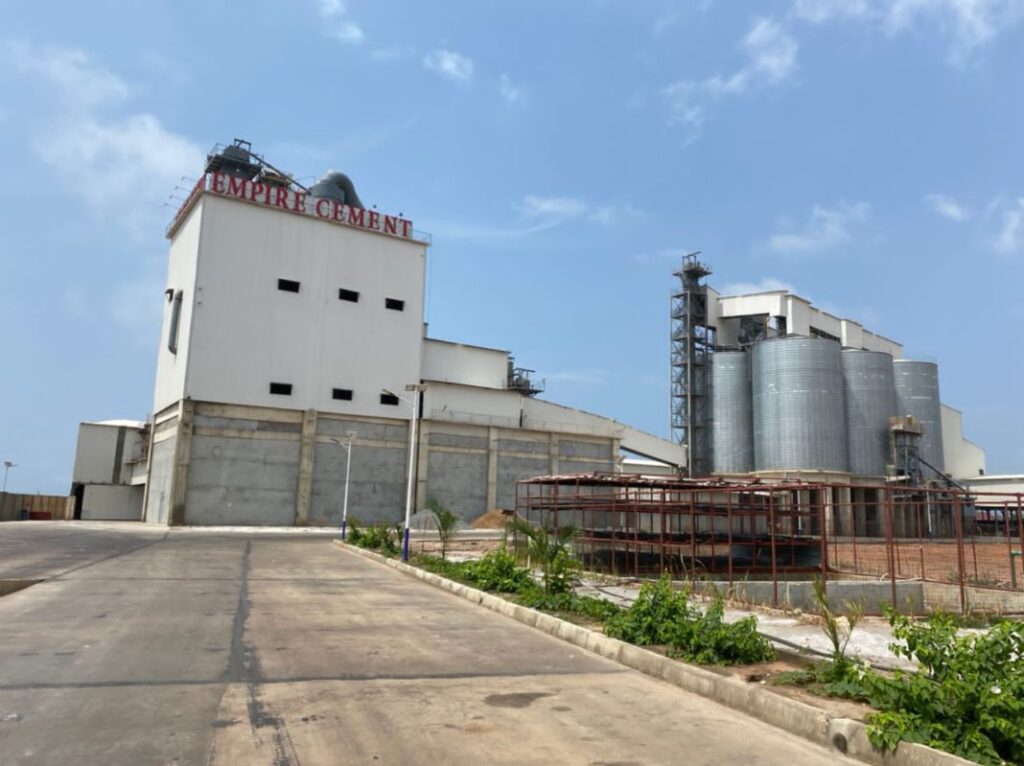
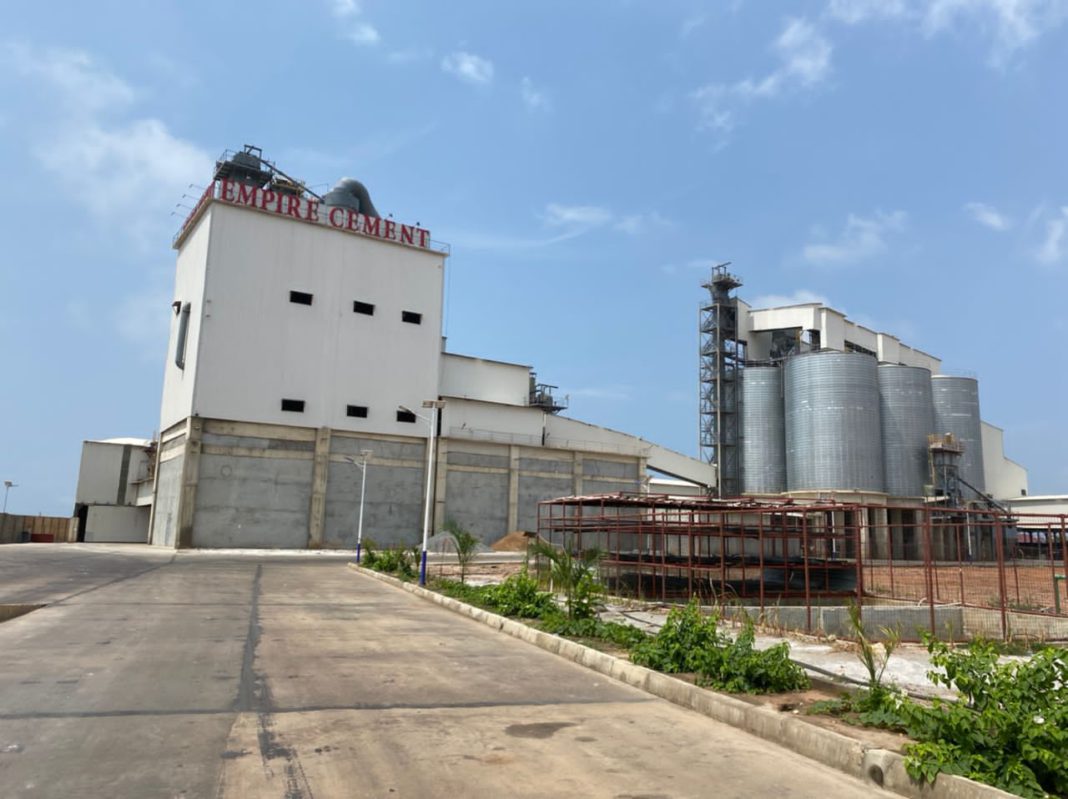
Residents of McCarthy Hill, Weija, Gbawe and surrounding communities in Accra are demanding the complete decommissioning of Empire Cement Ghana Limited, insisting that the factory should not operate in the densely populated area due to environmental and public health risks.
The demand follows a directive by the Environmental Protection Agency (EPA) ordering the company to shut down its operations on September 16, 2026, after investigations into complaints of air pollution and nuisance caused by the factory.
The residents are also accusing successive local and political authorities of failing to adequately address their concerns over the factory’s operations.
According to some residents, they were initially led to believe that the five-acre parcel of land on which Empire Cement is located would be developed into a shopping mall.
They said the late Oblempong Nii Kojo Ababio V, the Jamestown Maŋtsɛ and President of the Ngleshie Alata Traditional Council, had convinced residents that the land was intended for a shopping mall. They only later discovered that the site was being used for a cement factory, which they now accuse of subjecting the surrounding community to harmful pollution.
Some residents say they feel they were misled about the intended use of the land and have questioned how the factory was established in the densely populated area, polluting everything, including the edible salt produced by Panbros Salt.
They contend that the facility’s location has created serious environmental and health concerns for residents, particularly due to its proximity to homes and other activities in the area.
Empire Cement Ghana Limited is located in the Weija-Gbawe Municipal District of the Greater Accra Region, near Weija Junction and McCarthy Hill.
Residents have also raised concerns about what they describe as the failure of successive local authorities to adequately protect their interests.
They have mentioned former Weija-Gbawe Municipal Chief Executive (MCE) Patrick Kwesi Brako Kumor, who died on May 5, 2024, and his successor, Michael Danquah, both of whom were appointed during the Akufo-Addo administration.
Some residents allege that the two former MCEs did not do enough to address their concerns about the factory.
They have similarly questioned the approach of the current MCE, Felix Odartey Lamptey, an appointee of President John Dramani Mahama.
Some residents allege that Mr Lamptey has failed to adequately prioritize their concerns and claim that he is frequently seen in the company of the factory’s Managing Director, identified as Stephen.
The residents have interpreted such interactions as evidence of a close relationship between the municipal authority and the company. However, they have not provided evidence establishing that the relationship has influenced official decisions concerning the factory.
The residents have also expressed dissatisfaction with successive parliamentary representatives for the Weija-Gbawe constituency.
They cited former Deputy Minister for Health and former Member of Parliament for the constituency, Tina Ayele Mensah, as well as her successor and incumbent MP, Jerry Ahmed Shaib.
According to the residents, neither has done enough to address their concerns or secure an end to the factory’s operations.
They are demanding greater attention to the health and environmental implications of the factory and want their welfare to be prioritized over what they perceive as commercial interests.
The residents are also calling for greater scrutiny of what they describe as the relationship between the factory and some state institutions, including the National Security apparatus and the Ministry of Trade.
They allege that officials within some government institutions have maintained close relations with the company, which they believe has allowed the factory to continue operating despite their concerns.
The residents are therefore calling for an end to what they describe as a “cozy relationship” between public officials and the company.
Their demand is not necessarily for an end to cement manufacturing, but for Empire Cement to be removed from the residential and environmentally sensitive area. They argue that the factory could operate from a more appropriate location without exposing residents to what they describe as unacceptable environmental and health risks.
The EPA’s September 16 shutdown directive has strengthened the residents’ call for permanent decommissioning, although the agency’s action followed its own investigations into alleged air pollution and nuisance.
The residents now want the authorities to go beyond the temporary closure and take steps to permanently decommission and relocate the facility in insisting that the issue is ultimately about residents’ right to live in a safe environment and to have their health and welfare protected by the authorities responsible for the area.
The EPA said its investigations were initiated after receiving several complaints from members of the public concerning alleged air pollution linked to the company’s activities.
According to the agency, the investigations established that the company was releasing sustained visible particulate and gaseous emissions into the ambient environment, with potential negative implications for the environment, adjoining land uses and public health.
However, residents say the concerns go beyond air pollution and include the location of the factory, alleged flooding, environmental degradation and the potential long-term health effects of its operations.
President of the McCarthy Hill Residents Association, Eddie K. Quaynor, said years of exposure to pollution had affected the well-being of residents and warned that some of the health consequences could only become evident over time.
He said residents were particularly concerned about the potential impact of emissions on children, women and other vulnerable members of the community.
“The impact will be respiratory diseases, cardiovascular diseases, and all that. And it’s quite serious,” he said in an interview with Citi News.
Mr Quaynor said the location of the factory was a major concern, arguing that it operated in a highly populated residential area and was close to Pambros Salt, an edible salt production facility.
He also raised concerns about the alleged location of the factory on a Ramsar site, arguing that the development had broader environmental implications for the area.
According to him, residents had observed increasing flooding whenever it rained and believed that changes in water flow had contributed to the problem.
“It’s located in a highly dense residential area, and it’s close to Pambros Salt, which is an edible salt facility. The siting of the factory is on the Ramsar site. And because of the siting, we are seeing increasing flooding in the area whenever it rains,” he said.
He alleged that water had been diverted towards homes, resulting in damage to property and livelihoods.
“Water has been diverted to houses and homes, destroying livelihoods,” he added.
The flooding concerns, if established, would broaden the dispute beyond air pollution to questions concerning drainage, land use and environmental management in the area.
Mr Quaynor said the residents’ fundamental objection was not to cement manufacturing or the jobs associated with the industry, but to the location of the particular facility.
He said the association wanted the factory completely decommissioned and relocated to an area considered more suitable for such an industrial operation.
“The siting is wrong. And we are in court, as we speak. The case has been going on for just about three years,” he said.
“We will resist every attempt to get this factory out,” he added.
Responding to concerns that the closure of the factory could affect employment, Mr Quaynor said public health and environmental protection should take precedence.
He stressed that residents were not opposed to the creation of jobs by the cement industry, but believed such industrial activities should be located away from densely populated residential communities.
“Our health is more important. I mean, we’re not saying that the cement factory shouldn’t exist; it should, but not here,” he said.
“There are plenty of areas they can look into. It should be sited somewhere else, not here. We are not against providing jobs for young men and women here,” he added.
The residents’ position therefore centres on the argument that the factory may continue to operate as a business, but should not do so at its current location.
The EPA’s shutdown directive has added a new dimension to an already long-running dispute, with the residents’ association indicating that the matter has been before the courts for about three years.
While the residents have raised concerns about respiratory and cardiovascular diseases, flooding, and environmental degradation, the specific health and environmental impacts would require independent scientific, medical, and hydrological assessments to establish the extent of any causal links.
For now, the residents maintain that the permanent solution is the complete decommissioning and relocation of Empire Cement from McCarthy Hill.