




































Government has taken a major step toward overhauling military higher education with Cabinet’s approval of the National Defence University Bill, 2026, paving the way for its submission to Parliament for consideration.
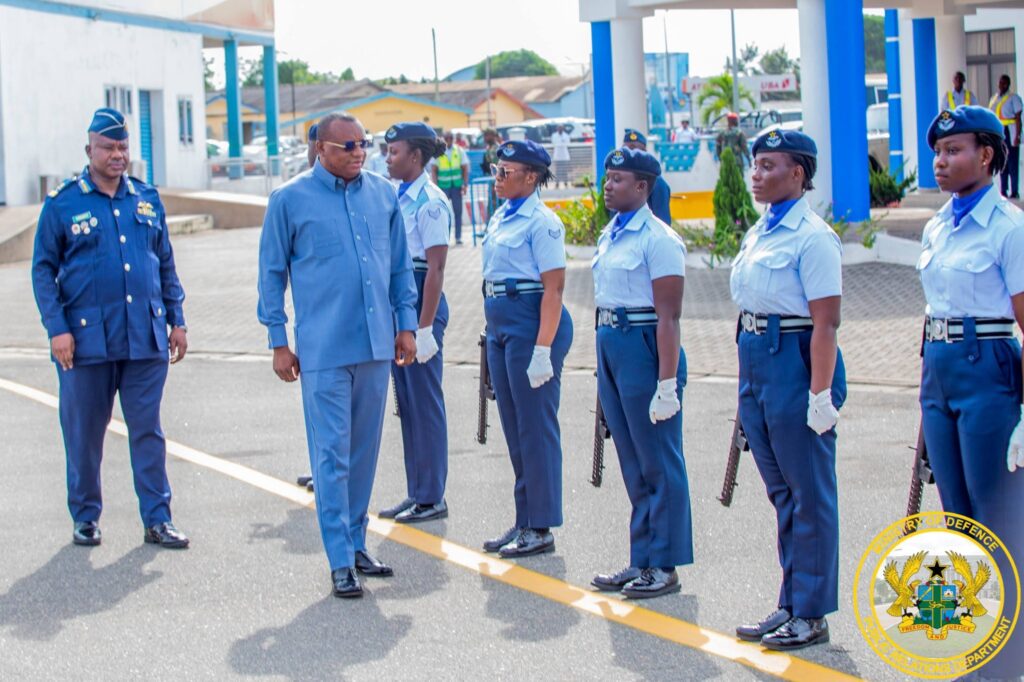
The development was disclosed when the Deputy Minister for Defence, Ernest Brogya Genfi, led a delegation to Parliament for a pre-session briefing with the Majority Chief Whip, Rockson-Nelson Dafeamekpor. The engagement formed part of ongoing consultations between the Ministry of Defence and parliamentary leadership ahead of the formal laying of the Bill.
The proposed legislation, which is a joint initiative between the Ministries of Defence and Education, seeks to create a single governing authority responsible for coordinating tertiary-level military education in Ghana. Under the plan, the new National Defence University would have the mandate to award degrees, diplomas, and certificates across all military training institutions.
Mr. Genfi informed Parliament that Cabinet had already reviewed and approved the memorandum backing the Bill, marking a significant milestone in the long-running proposal to establish a unified defence university system.
If passed into law, the Bill will consolidate key military academic institutions—including the Ghana Military Academy, the Ghana Armed Forces Command and Staff College, and the Kofi Annan International Peacekeeping Training Centre—under one structured academic framework. These institutions currently operate independently, with separate accreditation arrangements and external academic partnerships.
For instance, the Command and Staff College presently awards postgraduate degrees through collaborations with institutions such as the Ghana Institute of Management and Public Administration (GIMPA), while earlier arrangements also involved the University of Ghana.
The new system is expected to standardise academic programmes, improve quality assurance, and strengthen oversight of military education across the armed forces.
Beyond the military, the proposed National Defence University is also expected to serve personnel from other security agencies, including the Ghana Police Service and the Ghana Prisons Service. Authorities say the institution could eventually grow into a regional centre for advanced security and defence training in West Africa.
Government has already allocated GH¢25 million under the 2026 GETFund to support the initial phase of development at the proposed Teshie site, where the university is expected to be established.
The idea of a National Defence University was first announced in 2023, with initial plans targeting a 2024 commencement. Although that timeline was not achieved, the institution began operating in an acting capacity in early 2025 under the leadership of Air Vice Marshal Felix Adom Asante.
As part of preparations, officials from the institution undertook a study visit to Kenya’s Joint Command and Staff College in February 2026 to examine its operational model.
With Cabinet approval now secured, attention shifts to Parliament, where the Bill is expected to undergo debate and possible passage in the coming legislative session.