

































The Chief Executive Officer of the National Youth Authority (NYA), Osman Abdulai Ayariga, has called for urgent global action on youth development, stressing that it must be treated as a core governance priority rather than an afterthought.
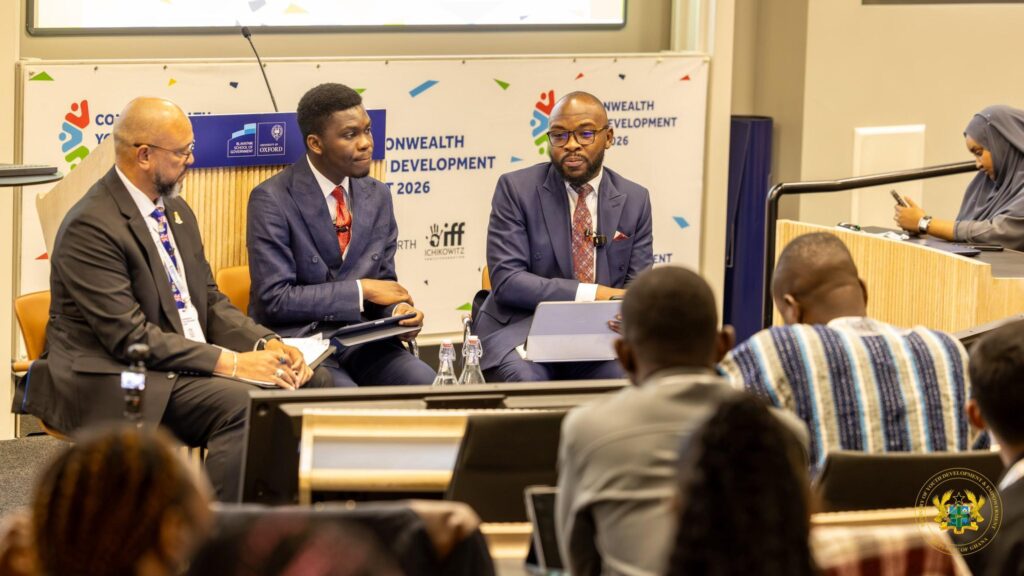
He made the remarks during a panel discussion at the Commonwealth Youth Development Summit, organized by the Commonwealth Youth Council at the University of Oxford.
Youth inclusion as a governance philosophy
Mr. Ayariga explained that Ghana’s approach to youth development is anchored in its National Youth Policy principle: “Benefit for youth, involve youth — together for a prosperous future.”
He emphasized that this is not a slogan, but a governance philosophy that shapes policy design, institutional structures, and programme delivery in Ghana.
According to him, inclusion must be deliberately built into systems at every level, rather than treated as an optional add-on.
Embedding inclusion in national systems
Outlining Ghana’s model, the NYA CEO noted that youth inclusion has been institutionalized through leadership representation and participatory governance structures.
He highlighted that marginalized groups, including persons with disabilities, are actively involved in decision-making processes within youth governance structures.
He cited the representation of persons with disabilities in leadership roles at the NYA, explaining that such appointments ensure lived experiences directly shape policy and programme delivery.
He also noted that representatives of marginalized youth groups serve on district and regional youth committees, as well as governing boards of youth institutions, strengthening accountability and oversight.
Programme design and targeted interventions
Mr. Ayariga further explained that Ghana has moved beyond consultation to intentional programme design, ensuring inclusion is embedded from the outset.
He referenced flagship interventions such as the National Apprenticeship Programme and the Adwumawura Programme, which include:
- Quota systems for marginalized youth
- Targeted outreach strategies
- Pre-implementation consultations with disabled youth, rural youth, displaced populations, and refugees
He stressed that these consultations are not symbolic but directly influence programme structure and implementation.
Institutionalizing youth voice
To ensure sustainability, he said Ghana is building permanent structures for youth participation.
These include platforms such as the Ghana Network of Youth with Disabilities, which serves as a national advocacy and coordination body.
He also disclosed ongoing efforts to establish a structured platform for refugee youth, aimed at strengthening their participation in national development processes.
Lessons for global youth development
Mr. Ayariga urged countries across the Commonwealth to adopt three key approaches:
- Shift from participation to co-decision-making, where young people actively influence decisions
- Integrate inclusion into programme design from the beginning
- Institutionalize youth engagement through permanent governance structures
He emphasized that meaningful youth development is not just about expanding access, but about redistributing voice, power, and opportunity.
The NYA CEO concluded that Ghana’s experience demonstrates that when young people—especially those from marginalized groups—are meaningfully included in governance, policies become more responsive and development outcomes more effective.
“Youth development must be treated with urgency and not as an afterthought,” he reiterated, calling for stronger global commitment to youth inclusion as a driver of sustainable development.