


















The Secretary to the President, Callistus Mahama, has addressed growing public concerns over the use of an aircraft owned by the President’s brother for official travel by John Dramani Mahama, emphasizing that the Presidency is mindful of both practical governance needs and public perception.
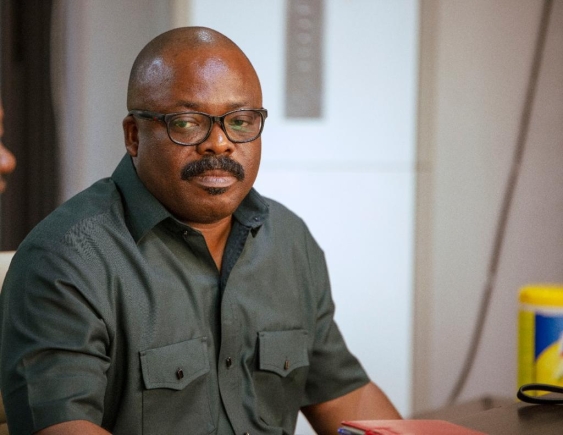
In a reflection on the issue, Dr. Mahama acknowledged that questions raised by citizens about the arrangement—particularly the possibility of a perceived conflict of interest—are legitimate in a democratic society.
“In a democratic society, citizens are not only entitled to ask such questions; they are duty-bound to do so,” he noted, adding that scrutiny is essential to maintaining public trust in leadership.
According to him, the matter has been taken seriously within the Presidency, especially as President Mahama pursues his governance framework known as the Reset Agenda, which seeks to rebuild confidence in public institutions and ensure responsible use of state resources.
Dr. Mahama explained that presidential travel involves complex considerations beyond ordinary transport arrangements. These include security protocols, diplomatic obligations, communication systems, and ensuring that the Head of State remains able to carry out executive duties even while abroad.
He said Ghana’s current aviation capacity for presidential travel presents certain limitations. Some aircraft historically used for government travel were not originally designed for long-range diplomatic missions, while others face operational constraints that make particular journeys difficult.
Although some members of the public have suggested commercial flights as an alternative, Dr. Mahama indicated that this option is not always practical for a sitting president, particularly during long-distance diplomatic missions with tightly scheduled engagements.
Despite these realities, he stressed that the Presidency recognises the importance of public perception in governance.
“Even when a practical solution exists, leadership must remain attentive to how the public understands it,” he said.
Dr. Mahama recounted that during preparations for an overseas engagement, the President asked officials to identify “the safest and most responsible option for the country,” underscoring that decisions about travel are guided by responsibility rather than convenience.
He also revealed that plans are underway to strengthen Ghana’s state aviation capacity. As part of a broader retooling of the Ghana Armed Forces, the country is expected to acquire additional aircraft for the presidential fleet.
By November this year, Ghana is anticipated to have new aircraft available, including one dedicated to presidential travel. The move is expected to restore full reliance on state-owned aviation assets for the transportation of the Head of State.
Dr. Mahama said this development will eliminate the need for temporary arrangements that have sparked the current public debate.
He further emphasised that President Mahama remains conscious of the economic pressures facing citizens and frequently raises concerns about the cost of governance, including official travel.
“The symbolism of leadership matters as much as the substance,” he said, noting that the Reset Agenda should ultimately be measured by steady institutional improvement and greater accountability.
He concluded that while the discussion surrounding the aircraft may be uncomfortable, it reflects the healthy engagement between citizens and leadership that sustains democratic governance.
“Public patience must be earned,” Dr. Mahama stated, adding that rebuilding stronger state systems—including aviation capacity—remains part of the government’s broader reform efforts.