































The Court of Appeal in Accra, has explained why it ordered the joinder of two lawyers and their law firm as defendants in an inheritance dispute involving the estates of two deceased siblings, Dr Daniel Narh Siaw and his sister, Baby Angelina Mamle Siaw, who were their clients.
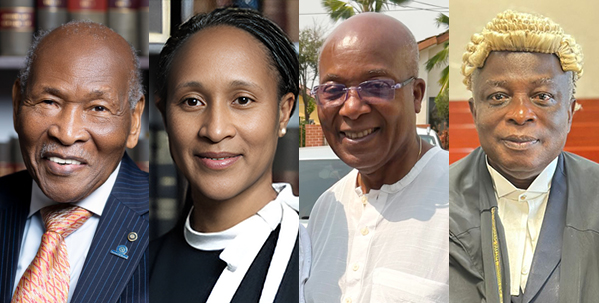
The Court said the allegations of fraud against Sam Okudzeto, his daughter, Esine Okudzeto, and their law firm, Sam Okudzeto & Associates, were not trivial and warranted their participation in the proceedings. It awarded costs of GH¢10,000 against the respondents in favour of Peter Kweku Okudzeto.
The three-member panel, comprising Justices Emmanuel Ankamah, Samuel Obeng-Diawuo and Cecilia Naa Shormeh Davis, unanimously allowed an interlocutory appeal by Peter Kweku Okudzeto against a High Court ruling by Justice Akosua Danso Asiama Christopher, which struck out Sam, Esine and Sam Okudzeto & Associates as unnecessary parties.
“The allegations of fraud are not trivial and are very serious, which merits the attention of the trial court,” the Court of Appeal judgment, obtained by The Herald, stated.
In a judgment delivered on June 25, 2026, the Court held that the two lawyers and their law firm were proper parties to the action because of the serious allegations of fraud and their alleged involvement in the administration of the two estates.
More Read
The Court also ordered that the substantive suit be taken from Justice Akosua Danso Asiama Christopher and assigned to a differently constituted High Court for determination on its merits.
The dispute concerns the estates of Dr Daniel Narh Siaw and his sister, Baby Angelina Mamle Siaw. They were the siblings of Peter’s late mother, Christiana Siaw Sappore. They have no blood relations with Sam Okudzeto and his daughter, Esi
They were only clients of Sam Okudzeto & Associates, a law firm owned by Sam Okudzeto, a former Council of State member, former Legal Ethics lecturer at the Ghana School of Law, former President of the Ghana Bar Association (GBA), representative of the GBA on the General Legal Council, and a member of the Council’s Ethics Committee.
Peter Okudzeto, a half-brother of Sam, who brought the action on his own behalf and that of his two siblings, Thomas Sekou and Felicia Sekou, is challenging the validity of a purported Will attributed to Dr Siaw and the Letters of Administration with Will annexed granted on July 25, 2024.
The 4th and 5th defendants, Eric Akwetey-Siaw Sappor and Charles Noble Doe Acolatse, were appointed administrators of Dr Siaw’s estate under the grant.
Serious allegations of fraud have been raised in proceedings concerning the estates of the late Baby Angelina Mamle Siaw and Dr Daniel Narh Siaw, with Peter accusing the defendants of making false representations to the court in an application for Letters of Administration with Will annexed.
The allegations form part of Peter’s case that certain properties belonging to the estate of Baby Angelina Mamle Siaw were improperly included in a purported Will of Dr Daniel Narh Siaw dated September 2, 2018.
According to Peter, some of the properties listed in the purported Will were not vested in the beneficiaries until 2019, making their inclusion in a Will purportedly executed in 2018 “fraudulent and anachronistic”.
Peter further alleges that Sam and his law firm had served as lawyers for the Estate of Baby Angelina Mamle Siaw since litigation over the application for Letters of Administration began in 2005 at the High Court in Tema, when, he alleges, a purported Will was forged, and a grant was fraudulently obtained.
He further alleges that certain properties, including the NCR Building opposite Roxy Cinema, Adabraka, Accra, belonging to the estate of Baby Angelina Mamle Siaw, were not properly disclosed or distributed and that some estate properties were deliberately undervalued to reduce estate duty and inheritance tax liabilities.
Peter also claims that Sam and the others involved in administering the estates knew of the alleged irregularities and acted in concert with the administrators to deprive the beneficiaries of their interests.
The High Court, however, concluded that the action was essentially a probate action and that the appropriate parties were the administrators of Dr Siaw’s estate.
The Court of Appeal agreed that the action was a probate action but disagreed with the High Court’s conclusion that the three were unnecessary parties.
Justice Ankamah, who delivered the judgment, said the law recognized a distinction between a necessary party and a proper party.
According to the Court, a necessary party is one whose presence is essential for the court to adjudicate fully and effectively on a dispute, while a proper party is one whose presence, although not indispensable, is desirable because the person’s rights or interests may be directly affected by the outcome.
The Court noted that Order 66, rule 28(2) of the High Court (Civil Procedure) Rules, 2004 (C.I. 47), allowed persons who claimed or appeared to have an interest in an estate to be joined in an action challenging the validity of a Will.
The three judges noted that Peter had alleged that Sam and his law firm continued to hold documents relating to the estate of Baby Angelina Mamle Siaw and that some assets connected to that estate had allegedly found their way into Dr Siaw’s purported estate.
The lawyers, Peter claims, prepared the vesting assents and billed the estate and therefore ought to have known that, as at 2018, none of the properties had been vested in the beneficiaries, including Dr Daniel Narh Siaw.
Peter said that even in 2019, when the vesting assents were being prepared, Dr Narh Siaw considered that, as the sole administrator, the only surviving sibling and the sole surviving direct beneficiary of the estate at the time, his own vesting assent should be executed last.
It is further alleged that Dr Narh Siaw had expressed a willingness to relinquish his shares in the estate in favour of the children of his deceased brother and sister and other principal beneficiaries who had predeceased him.
Peter said email correspondence between Sam Okudzeto’s chambers and the late Dr Narh Siaw would be tendered in evidence to establish the circumstances surrounding the vesting of the properties.
Peter also alleges that Esine, who allegedly drafted one of Dr Narh Siaw’s Wills and was named as a beneficiary, ignored discrepancies and other “red flags” surrounding the document before it was used to support the application for Letters of Administration with Will annexed.
A major aspect of the allegations concerns the imposing NCR Building, House Number D.541/4, Liberty Avenue, Accra, with Land Registry Number 1744/1966, located opposite the former Roxy Cinema at Adabraka.
Peter claims the property was not included in the original declaration of the estate when the application for Letters of Administration was filed at the High Court in Tema.
Consequently, Peter says, no estate duty was paid on the property because the beneficiaries were unaware of its existence until he discovered it in late 2019.
According to Peter, he subsequently informed his uncle, the late Dr Narh Siaw, through his nephew, Christian Ofoe Okudzeto-Ahadjie.
Peter said an email dated October 19, 2019, exchanged between himself and Dr Narh Siaw through Mr Okudzeto-Ahadjie, would be tendered in evidence.
He also relies on WhatsApp correspondence dated July 1, 2021, in which the law firm allegedly acknowledged the late discovery of the NCR Building. He argues that, despite the property being discovered only in 2019, it appeared in the purported Will dated September 2, 2018.
Peter has also raised questions about the identity and address of one of the purported beneficiaries, Yvonne Dwomoh Okudzeto.
He claims that, although the Will gives her address as the Vienna International Centre of the International Atomic Energy Agency in Austria, she was, in fact, a student at the Università degli Studi di Macerata in Italy between 2017 and 2020.
Peter argues that the discrepancy raises further questions about the authenticity and preparation of the purported Will.
Peter further alleges that a search of the British system revealed only one Will filed in the United Kingdom on behalf of the late Dr Narh Siaw.
However, he claims the 3rd, 4th and 5th defendants subsequently drafted purported Wills in Ghana in Dr Narh Siaw’s name and attached a copy of the signature and witness page of the UK Will to the Ghanaian documents, despite the documents containing different contents and properties.
According to Peter, the signatures attributed to the witnesses on the UK Will and those appearing on the Ghanaian probate documents differ.
He further alleges that Dr Narh Siaw’s signature on the UK Will differs from the signature appearing on the purported second and third Wills relied upon in the application for Letters of Administration with Will annexed at the Accra High Court.
Peter said copies of the relevant documents would be tendered in evidence at the trial.
Peter had also challenged an assertion in an affidavit filed in support of the application that all three Wills and Testaments of Dr Narh Siaw were read at the registry of the High Court Complex, Accra, on May 13, 2024, in the presence of family members.
He argues that several of the individuals allegedly present were not family members of the deceased.
Peter further contends that although the 4th defendant is a family member, he was born in Takoradi and spent most of his life there, did not speak the Ga-Adangbe dialect, and was not familiar with most of the deceased’s family members.
Peter said he contacted Franklin Korley Akwetey, whom the 4th defendant had previously nominated as Head of Family of the Takoradi section of the family in an application for Letters of Administration relating to his late father, and that Mr Akwetey categorically denied attending or being invited to any reading of a Will at the High Court.
Peter also claims that neither he nor his siblings, who are beneficiaries, were invited to the alleged reading.
He questions which family members attended the event, at which High Court registry it took place and the identity of the Registrar involved.
According to Peter, no close family member, including the biological children of Dr Narh Siaw, who are based in London, was present when the purported Will was read.
He further alleges that no valid Will complying with due process was deposited at the registry of the High Court in Accra and that no family member was invited before the purported Will was read.
Peter said the Registrar concerned may be subpoenaed to produce relevant documents and testify about his alleged role in the process through which the Letters of Administration with Will annexed were obtained.
The Court of Appeal noted that the allegations of fraud were serious and warranted consideration by the trial court.
Peter alleges that Sam continues to hold certain documents relating to the estate of Baby Angelina Mamle Siaw, while some assets whose documentation remains with the respondents have allegedly found their way into Dr Narh Siaw’s estate.
The Appellant contends that these actions were deliberately undertaken by Sam and his law firm to disinherit him and his siblings. However, the Court of Appeal said Peter bears the burden of producing evidence and persuading the court that the allegations are true.
Under sections 11(1) and 17 of the Evidence Act, a party who asserts a claim must adduce sufficient evidence in support of it, failing which the court may resolve the claim against that party.
Peter has also raised a specific concern about the conduct of Esine, alleging that she drafted one of Dr Narh Siaw’s Wills, under which she was named as a beneficiary, and subsequently acted for the 4th and 5th defendants, Eric Akwetey-Siaw Sappor and Charles Noble Doe Acolatse, in obtaining Letters of Administration with Will annexed.
Peter argues that the circumstances warrant close judicial scrutiny.
He relies on Barry v Butlin [1838] 12 E.R. 1089, in which the court held that where a person prepares a Will under which that person takes a benefit, the circumstance naturally raises suspicion and requires the supporting evidence to be examined with vigilance before the instrument is upheld, unless the suspicion is dispelled.
Peter, therefore, maintains that Esine is a proper party to the proceedings because of her alleged dual role as drafter of the Will and beneficiary under the same instrument.
The Court stressed, however, that the allegations remained matters to be established by evidence at trial. It said the burden was on Peter to produce sufficient documentary evidence and persuade the court of his claims, particularly because fraud had been alleged, while the defendants would have the opportunity to respond.
The Court of Appeal found that Esine Okudzeto’s alleged role in preparing one of Dr Siaw’s Wills, under which she was said to be a beneficiary, and subsequently acting for the 4th and 5th defendants in obtaining the Letters of Administration, made her a proper party to the proceedings.
Esine’s argument that she had no interest in the estate because no vesting assent had been executed in her favour was rejected.
Justice Ankamah explained that a vesting assent did not create beneficiary status but transferred legal title in estate property to an already identified beneficiary.
The Court also observed that where a person prepares a Will under which that person takes a benefit, the circumstances naturally require careful scrutiny by the court.
The judgment also examined the wider legal question of whether lawyers retained by estate administrators could, in certain circumstances, owe obligations to beneficiaries.
The Court held that, as a general principle, a lawyer’s contractual, professional and fiduciary duties are owed to the client who retained the lawyer.
However, it said that the principle did not necessarily prevent beneficiaries from pursuing claims against estate lawyers in appropriate circumstances.
Referring to Section 5(1) of the Contracts Act, 1960 (Act 25), the Court said a contract could confer enforceable benefits on persons who were not parties to it where the contract purported to benefit them as a designated person or member of a class.
The Court said beneficiaries could, depending on the terms of the retainer, potentially have a statutory contractual claim against a lawyer engaged to administer and distribute estate assets.
It added that an extended fiduciary duty could also arise where a lawyer’s conduct demonstrated that the lawyer had assumed responsibility towards identified beneficiaries.
The Court further stated that a lawyer involved in estate administration could, in appropriate circumstances, be treated as a constructive trustee if the lawyer received trust property with knowledge of the trust or made an unauthorized secret profit, received an undisclosed commission or acquired estate assets at an undervalue.
The Court of Appeal emphasized that such liability would depend on the evidence and circumstances of each case.
In the present case, the lawyers asserted that they were retained by the administrators to provide specific legal services, which they had discharged. However, the Court noted that no retainer agreement had been tendered in evidence.
Peter, who shares the same father as Sam, disputed the scope of the lawyers’ retainer, making it an issue to be determined at trial.
The Court therefore held that the presence of Sam, Esine and their law firm was necessary to enable the trial court to fully and effectively determine the allegations against them and avoid multiple proceedings.
“We accordingly allow the appeal in this part and hereby order that the 1st, 2nd and 3rd Respondents are proper parties to the suit,” the Court held.
It subsequently ordered that Peter’s suit be heard by a differently constituted High Court.
“The appeal succeeds in its entirety,” the Court declared.
It awarded costs of GH¢10,000 in favour of Peter, against the respondents, who have since proceeded to the Supreme Court to fight the Appeals Court decision.