


























appropriate duties, were subsequently intercepted and impounded by Customs officials acting under the orders of the Tema Port Sector Commander, Michael Kweku Nelson.
The development has reportedly triggered a standoff between some Customs officials and the Tema Regional Police Command, amid disagreements over whether the containers should remain in Customs custody pending valuation and the payment of duties.
Sources familiar with the development claim that as much as US$2 million has allegedly been made available as an inducement to facilitate the release of the goods to the suspected smugglers.
Observers following the development have questioned why persons allegedly involved in the smuggling would be prepared to part with such a substantial amount of money to secure the release of the containers.
They argue that, if the US$2 million figure is accurate, it could indicate that the value of the goods and the corresponding customs duties and other statutory charges involved are potentially substantial.
According to information available to The Herald, Customs officials are pushing for the contents of the containers to be properly examined and valued, with the appropriate duties and other charges paid to the state before any consideration is given to their release.
However, sources claim that Prince Awuku has taken a different position, insisting that the goods be released to the persons who allegedly removed the containers from the port without paying the required taxes and duties.
The disagreement is said to have intensified after the Tema Police Command allegedly became involved in the matter.
According to sources, the Tema Regional Police Commander is alleged to have argued that some of the containers were either owned by persons connected to the Presidency, and it’s those at Flagstaff House who had authorised the removal of the containers from the Tema Port by officials at the Presidency, making it inappropriate for Customs to continue detaining them.
The claim concerning ownership or presidential authorisation could not independently be verified by The Herald.
The reported intervention has subsequently contributed to tensions between some officials of the Customs Division and the Tema Regional Police Command.
Videos purportedly showing the seized containers and their contents have meanwhile circulated widely on social media.
The footage shows several containers bearing identifiable numbers, as well as goods including hundreds of sacks believed to contain black pepper and wooden boxes containing unspecified items.
Other items reportedly found among the consignments include alcohol and cyanide.
The circulation of the videos is said to have been prompted by concerns among eyewitnesses and some Customs personnel who wanted to draw the attention of senior state authorities and the general public to what they regard as difficulties confronting the revenue agency in enforcing customs laws and protecting state revenue.
The Customs officials involved are said to be maintaining that the goods must first undergo the necessary customs processes, including valuation and assessment of the duties payable.
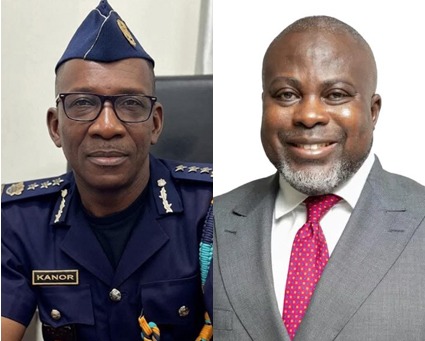
Their position is reportedly backed by senior officials at Customs headquarters, including the Acting Commissioner of the Customs Division, Aaron Kanor.
The Ghana Revenue Authority, which was established in 2009 through the merger of the former revenue agencies including the Customs, Excise and Preventive Service (CEPS), has a mandate that includes ensuring compliance with tax laws, revenue mobilisation and the controlled flow of goods across Ghana’s borders.
Mr Kanor, the Acting Commissioner of the Customs Division is out of the country, but said to be in support of what his men are doing.
The latest development has raised questions about the extent to which some Customs officials can independently enforce revenue laws when other state institutions or officials intervene in the detention and processing of goods suspected to have been smuggled.
The identities of the persons or companies responsible for the containers, the circumstances under which the containers were removed from the port remain subjects requiring further investigation.