
















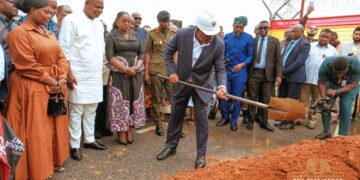


















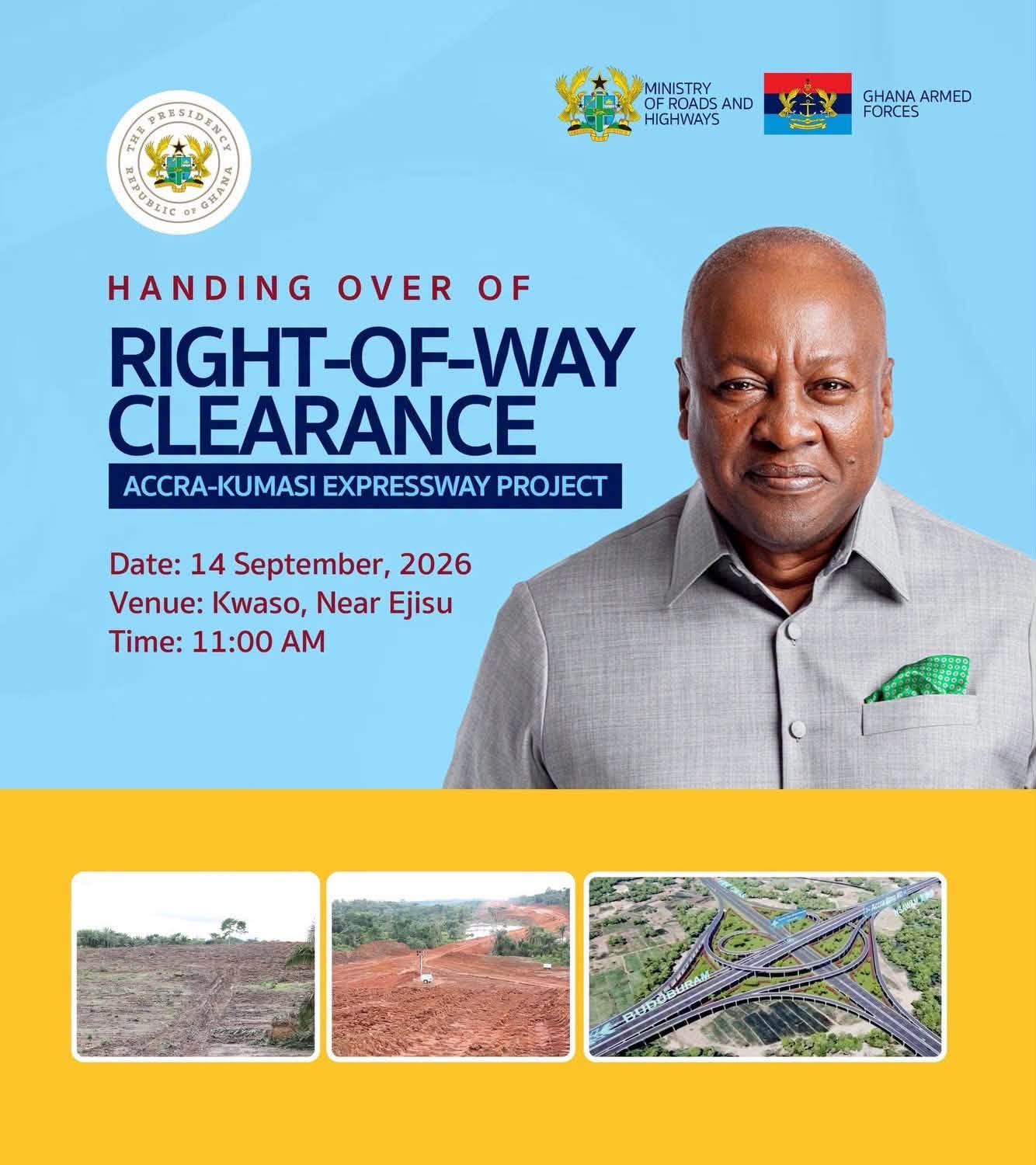
President John Dramani Mahama is expected tomorrow to formally receive the clearance of 175.6 kilometres of right-of-way for the construction of the proposed Accra-Kumasi Expressway.
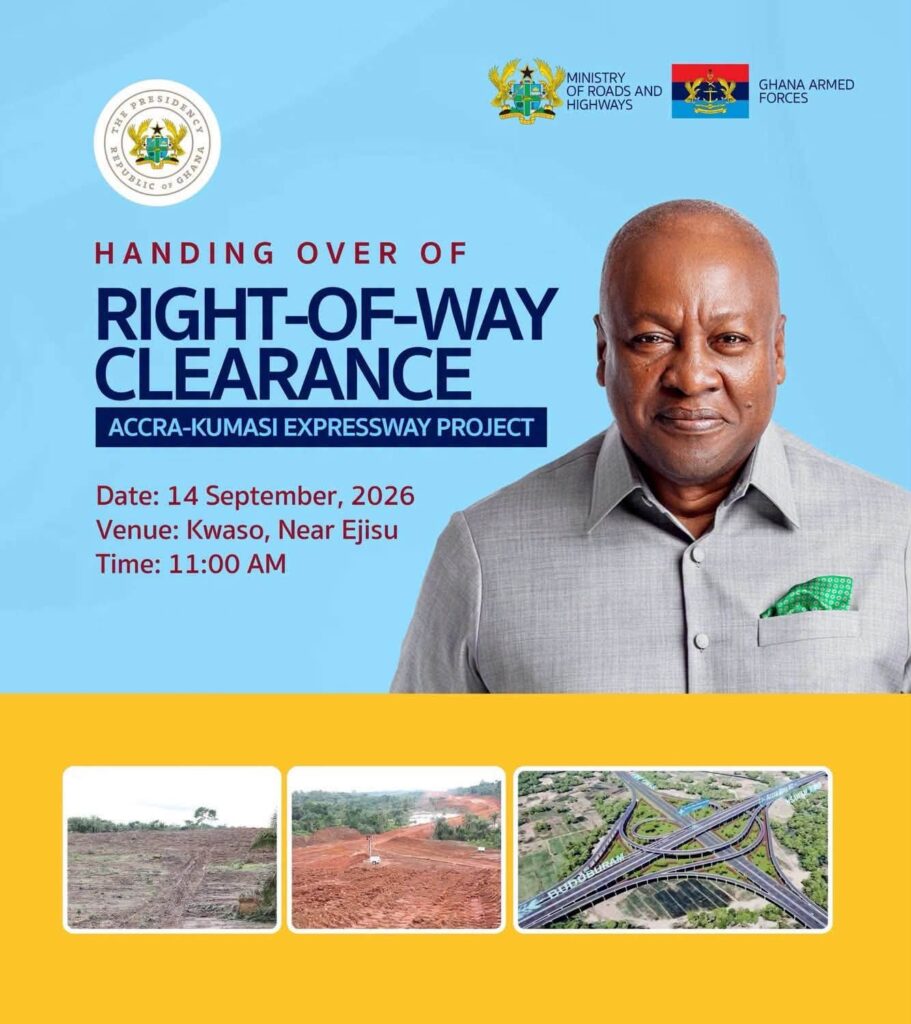
The formal handover, which will take place at Kwaso near Ejisu in the Ashanti Region, will mark a major milestone towards the commencement of the project, which is expected to transform road transportation between Ghana’s two major cities.
Engineers of the Ghana Armed Forces have undertaken the clearance of the 175.6-kilometre stretch, paving the way for the next phase of preparations for the construction of the 198.7-kilometre Accra-Kumasi Expressway.
In road construction, the right-of-way refers to the total width of land legally acquired and reserved for the construction, operation, maintenance and possible future expansion of a road or highway.
The clearance of the route is therefore considered a critical step in ensuring that construction activities can proceed without major encumbrances along the designated corridor.
The Accra-Kumasi Expressway is envisaged as a major infrastructure project aimed at improving connectivity between Accra and Kumasi, reducing travel times, enhancing road safety and supporting economic activity along one of Ghana’s busiest transportation corridors.
The project is also expected to strengthen the movement of people and goods between the southern and middle parts of the country, with potential benefits for trade, commerce and regional development.
The project has been described as the single largest capital investment by any government in the history of Ghana, underscoring its scale and strategic importance to the country’s long-term infrastructure development.
President Mahama’s presence at the handover ceremony is expected to highlight the government’s commitment to advancing the project and delivering major transport infrastructure as part of its broader development agenda.
The 198.7-kilometre expressway, once completed, is expected to significantly reshape road transportation on the Accra-Kumasi corridor and provide a modern alternative to the existing route.