





























The Inter-Governmental Action Group Against Money Laundering in West Africa (GIABA) has charged religious leaders across the sub-region to become frontline partners in combating money laundering, terrorism financing and other organized crimes undermining West Africa.
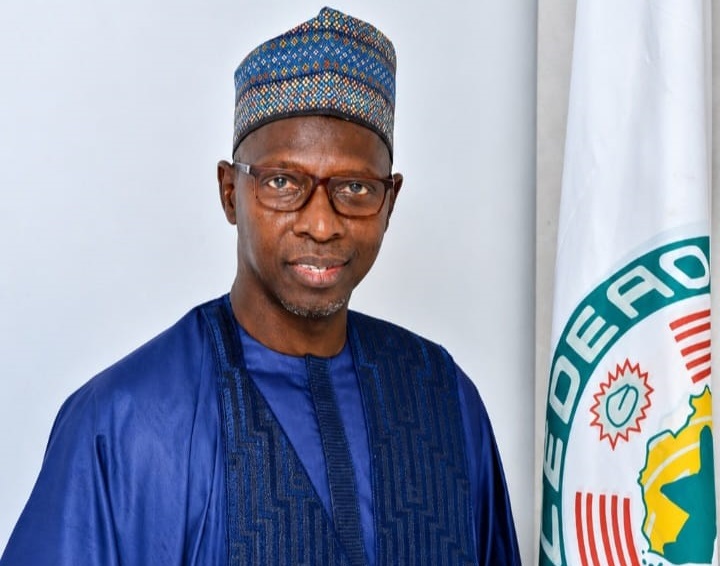
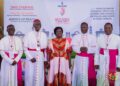
The call was made by the Director-General of GIABA, Mam Cherno Jallow, at the National Sensitisation Seminar on Anti-Money Laundering and Countering the Financing of Terrorism (AML/CFT) for Religious Leaders and Institutions held in Banjul, The Gambia.
The high-level seminar was held under the theme “Promoting AML/CFT on the Altar.”
Addressing clerics and faith-based institutions on Tuesday, Mr. Jallow said the surge in illicit financial crimes and violent extremism across West Africa requires the moral authority of religious leaders to restore ethical values and peaceful coexistence.
He noted that religious leaders command immense trust and influence over millions of congregants and must deploy that influence to discourage activities that threaten peace, security and economic development.
“In promoting peaceful coexistence, the voice of our religious leaders must be strongly heard against those ills ravaging our societies, especially violent extremism, terrorism, corruption, human trafficking, kidnapping and other predicate offences,” he said.
According to him, the fight cannot be won by preaching alone, but by exemplary leadership.
“They must not only be heard, but must be seen to lead the way by actions and exemplary lifestyles,” Mr. Jallow emphasized.
He explained that GIABA’s decision to engage religious leaders is strategic, given the growing sophistication of criminals who launder proceeds from corruption, kidnapping, drug and human trafficking through legitimate financial systems, including religious channels.
He warned that West Africa continues to face severe threats from terrorism financing and violent extremism, which require broader collaboration beyond governments and security agencies.
GIABA, a specialized institution of ECOWAS and a Financial Action Task Force-Style Regional Body established in 2000, is mandated to protect the economies of member states from abuse and to ensure compliance with international AML/CFT standards, including the FATF 40 Recommendations.
The organization conducts mutual evaluations to assess the effectiveness of member states’ anti-financial crime systems and has in recent years expanded its outreach to non-state actors.
Mr. Jallow recalled that GIABA’s engagement with faith groups dates back to 2011 when it participated in the Annual Convention of the Ahmadiyya Muslim Youth Organisation in Nigeria to sensitise youths on money laundering and terrorism financing.
This was followed by its participation in a security conference for church leaders in 2013, before formally launching a dedicated programme for religious leaders and institutions in 2017.
He noted that the Banjul edition is the second of its kind in The Gambia, after the first seminar held in 2019, demonstrating GIABA’s sustained commitment to faith-based engagement.
Challenging participants to move beyond attendance, the GIABA boss said the seminar must be seen as a call to moral action.
“If we must rid our societies of these wrongdoings, then, we must continue to stand as the shining light and examples which we are; we must resist all the negative influences and help in guiding the path of our followers in building a safe and secure society,” he stated.
He however clarified that religious leaders alone cannot win the fight, but their partnership is indispensable.
On its part, The Gambia’s Financial Intelligence Unit (FIU) warned that religious institutions, due to their role in receiving donations and managing charitable funds, could be vulnerable to abuse by money launderers and terrorist financiers.
The FIU urged churches and mosques to maintain proper financial records, ensure transparency in fund management, and exercise due diligence when receiving large donations or entering partnerships with external donors and organizations.
The seminar ended with a renewed commitment from religious leaders to use their altars and pulpits as platforms for anti-crime advocacy.