
























….Parliament ordered to investigate falsified records & inflated claims

Parliament has referred a special audit report on GH¢68.7 billion in government arrears and payables to the Public Accounts Committee (PAC) for investigation, following an exercise that uncovered suspected irregularities, falsified records and questionable payment claims.
The Ministry of Finance has disclosed that duplicated and overstated claims were identified in submissions from various ministries, departments and agencies (MDAs), according to a report on arrears and payables compiled by the Auditor-General’s Department as at the end of 2024.
In total, claims amounting to GH¢68.7 billion were presented for verification. However, the audit found that GH¢8.1 billion of the claims could not be validated and were therefore rejected.
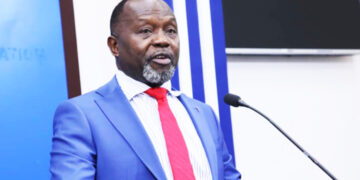
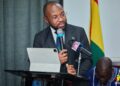
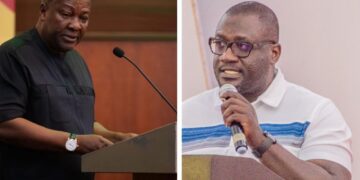
The report, presented to Parliament yesterday, Tuesday, March 10, was submitted by the Ministry of Finance through the Deputy Finance Minister, Thomas Nyarko Ampem, acting on behalf of the Finance Minister, Cassiel Ato Forson.
It relates to the Ghana Audit Service report on arrears and payables as at the end of 2024, meaning the claims were made during the tenure of the outgoing Akufo-Addo administration.
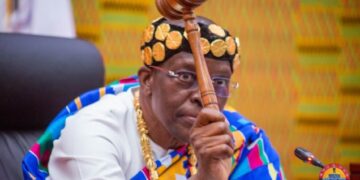
The First Deputy Speaker of Parliament, Bernard Ahiafor, subsequently referred the report to the PAC for detailed examination and directed the committee to conclude its investigation within three weeks. It remains uncertain whether the process will yield meaningful results or, as critics often argue, be affected by partisan disagreements, especially when some of those to explain are in Parliament as lawmakers.
According to the report, the Ghana Audit Service, working in collaboration with international professional services firms Ernst & Young (EY) and PricewaterhouseCoopers (PwC), conducted a verification and validation exercise on arrears submitted to the Ministry of Finance by various MDAs.
The audit focused on unpaid Interim Payment Certificates (IPCs), invoices and Bank Transfer Advices (BTAs) owed to contractors and suppliers.
Presenting highlights of the report to Parliament, Mr Ampem explained that the rejected claims were flagged for several irregularities.
“A total of GH¢8.1 billion was rejected for various reasons, including unsupported documentation, duplication, overstatements, already-paid items, falsified store receipt advice and cases where no work had been done,” he told lawmakers.
The findings have raised concerns about possible fraudulent claims embedded within the massive stock of government arrears accumulated over previous years.
Despite the rejected claims, the audit validated GH¢45.4 billion in legitimate obligations, meaning the government is expected to settle those payments, subject to fiscal space and further verification.
The remaining portion of the claims is still being reconciled and reviewed.
Government arrears to contractors and suppliers have long been a major fiscal challenge in Ghana, often contributing to cash-flow constraints within the private sector and affecting infrastructure development projects.
Economists note that large arrears can distort public finances by creating hidden liabilities that are not fully reflected in annual budgets.
The audit exercise was therefore undertaken to establish the true size and legitimacy of outstanding government payables, particularly as the country works to stabilise its economy and restore fiscal discipline following recent economic challenges.
By referring the matter to the Public Accounts Committee, Parliament is seeking to ensure accountability and transparency in the management of public funds.
The PAC, which is responsible for examining reports of the Auditor-General and investigating the use of public resources, is expected to scrutinise the findings, summon relevant officials and determine whether any wrongdoing occurred.
Lawmakers say the committee’s work will be critical in identifying the source of the questionable claims and recommending sanctions where necessary.
The referral also comes amid increasing calls for stronger oversight of government expenditure and stricter enforcement of financial management laws.
The revelations highlight persistent weaknesses in public-sector procurement, contract management, and payment systems.
If confirmed, the alleged irregularities could represent one of the largest disputed arrears claims in Ghana’s recent fiscal history.
The PAC’s investigation is therefore expected to attract significant public attention as Parliament seeks to determine how billions of cedis in claims were processed and whether fraudulent documentation was used in attempts to secure government payments.
The committee is expected to present its findings and recommendations to the House after completing its review within the stipulated three-week period.
“Mr Speaker, auditors identified duplicated and overstated claims by MDAs totalling GH¢1.4 billion,” Mr Nyarko Ampem told the House while presenting the statement on behalf of the Finance Minister, Cassiel Ato Forson.
Mr Nyarko Ampem outlined several institutions cited in the findings, noting that some had submitted duplicated claims while others recorded overstated arrears.
According to the report, the Ministry of Local Government, Chieftaincy and Religious Affairs accounted for duplicated claims totalling GH¢408.31 million.
The Ministry of Energy was cited for duplicated claims amounting to GH¢386.71 million.
The National Service Scheme was also found to have overstated allowance arrears amounting to GH¢334.5 million.
In addition, the Ministry of Roads and Highways recorded duplicated claims totalling GH¢125.65 million, while the Ministry of Health was cited for duplicated claims amounting to GH¢114.2 million.
The National Commission for Civic Education (NCCE) was also listed in the report with duplicated claims totalling GH¢8.8 million.
Other affected institutions include the Ministry of Gender, Children and Social Protection, the Judicial Service, the Ministry of Special Initiatives and the Office of the Attorney-General and Ministry of Justice.
The Deputy Finance Minister stressed that the findings underscore the need for stronger accountability and stricter financial discipline across public institutions.
He said the government remains committed to ensuring that public resources are managed responsibly and transparently.
The Ministry of Finance further indicated that, going forward, no financial commitments would be entered into without the necessary budgetary allocations in place.
The measure, the ministry said, forms part of broader efforts to strengthen fiscal control, prevent irregular claims and improve financial management across government institutions.
The Auditor-General’s report also exposed financial misconduct in the Agenda 111 programme, revealing that US$7.9 million was paid to 35 contractors as advance mobilisation funds.
The audit found that the contractors either failed to mobilise to project sites or delivered work not commensurate with the payments received.
Additionally, the advance mobilisation guarantees securing the US$7.9 million, which had all expired, prompting the Auditor-General to issue surcharge notices to the contractors involved.
The report further uncovered GH¢293 million in government payments made without supporting documentation, raising concerns about financial accountability.
The undocumented Bank Transfer Advices (BTAs) were identified across six MDAs, including the Ministry of Gender, Children and Social Protection (GH¢241.2 million) and the Ministry of Roads and Highways (GH¢26.3 million).
The lack of contracts, IPCs and records of executed work for these transactions has sparked questions about transparency and oversight in government spending.
The Auditor-General’s report on arrears and payables as at the end of 2024, as presented by the Ministry of Finance, revealed several key findings indicating areas of concern in government financial management.
Key findings include unsupported bank transfers amounting to GH¢293 million in Bank Transfer Advices without supporting documents across six MDAs, including significant amounts from the Ministry of Gender, Children and Social Protection (GH¢241.2 million) and the Ministry of Roads and Highways (GH¢26.3 million).
Out of GH¢68.7 billion submitted for audit, GH¢45.4 billion was validated for payment.
GH¢8.1 billion was rejected for various reasons, and GH¢7.1 billion in outstanding IPCs and invoices was also rejected.
Meanwhile, GH¢13.3 billion remains pending validation for various reasons.
The findings suggest potential weaknesses in financial controls and documentation processes within Ghana’s public institutions, highlighting the need for improved accountability and transparency in public financial management.