


































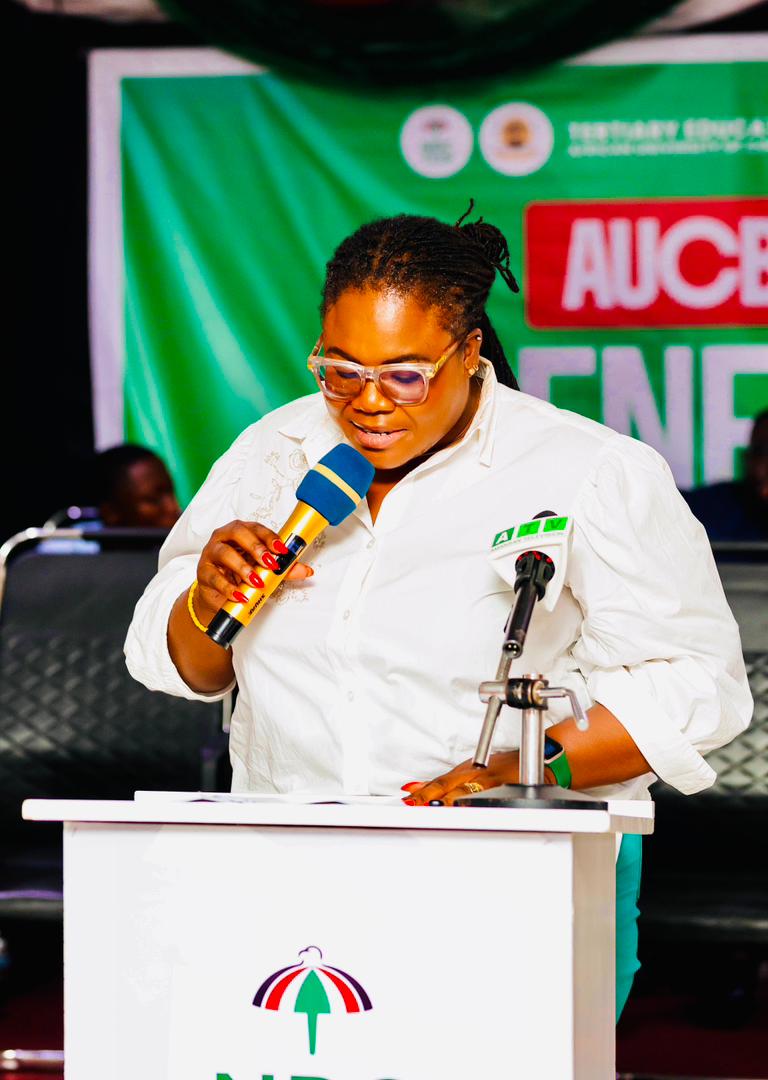
At a gathering of student leaders and party activists, the NDC’s National Deputy Women Organizer, Abigail Elorm Akwambea Mensah, delivered a pointed message to Ghana’s youth: visibility alone does not translate into influence.
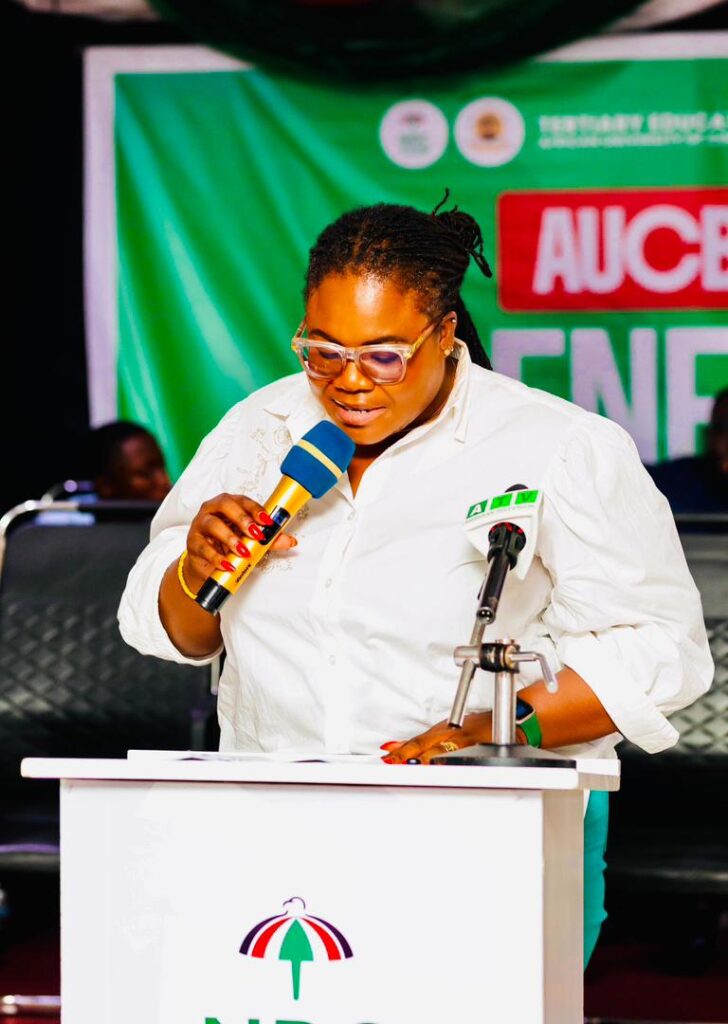
Addressing members of the Tertiary Education Institutions Network (TEIN) at AUCB, Ms Mensah challenged young people to move beyond online activism and take up roles within formal political structures where decisions are made. “A voice can inspire,” she stated, “but power writes policy.”
Her remarks come at a time when youth participation in political discourse is at a high, particularly across social and digital platforms. However, this visibility has not been matched by representation in leadership positions, governance, or policy-making spaces.
Rejecting the long-held notion that leadership is tied to age, Ms Mensah emphasized that political authority must be earned through preparation, discipline, and service—not postponed by convention. She encouraged young people to actively engage political systems by joining party structures, developing competence, and contesting leadership roles.
She placed particular emphasis on the role of young women, urging them to step beyond supportive roles and claim positions of authority. According to her, their involvement is not only vital for inclusion but also for improving the quality and diversity of leadership.
Framing the current period as a generational turning point, Ms Mensah posed a critical question to Ghana’s youth: whether to remain visible yet peripheral, or to become central actors in shaping the country’s future.
“The future,” she concluded, “will not reward the loudest voices, but the most prepared.”